





- A +
- A
- A -
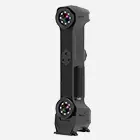
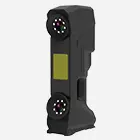
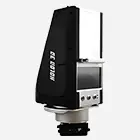
Aircraft windshields frames are key structural components that guarantee windshield assembly accuracy and cockpit sealing performance. Customers need to obtain high‑precision, highly‑detailed and complete 3D data of the frame via 3D scanning. By comparing the scanned data with the original model, a 3D inspection chromatogram is generated to intuitively quantify core indicators such as frame dimensional tolerances and assembly reference position deviations, so as to scientifically determine whether the frame is qualified. Given the customer’s stringent requirements for scanning accuracy and data completeness, as well as the need to adapt to inspection scenarios including repair shops and production workshops, traditional measurement methods fail to meet high‑precision inspection standards. For this reason, the HOLON 3D Model 49 handheld full‑blue‑laser industrial‑grade 3D scanner is adopted to deliver an accurate and efficient digital inspection solution for aircraft windshield frames.

Physical photos of aircraft glass
The core challenges in aircraft windshield inspection lie in dimensional accuracy and detail capture: First, although the frame features no special curved‑surface structures, it serves as a critical fitting component with stringent requirements for indicators including edge flatness, spacing of mounting holes, and datum‑surface tolerances. Conventional local‑measurement tools (such as calipers and gauges) cannot acquire full‑dimensional data in a single pass, and manual multi‑point measurement tends to generate cumulative errors, which compromise the accuracy of inspection results. Second, the frame has special surface material properties, causing conventional scanning equipment to suffer from partial data distortion due to material interference, making it difficult to precisely reconstruct fine features such as mounting‑hole edges and datum‑surface junctions. Furthermore, traditional measurement methods suffer from low efficiency and significant scenario‑dependent limitations. They cannot flexibly meet requirements such as rapid on‑site inspection at maintenance facilities and batch sampling inspection in production workshops, thereby restricting the overall quality‑inspection progress.
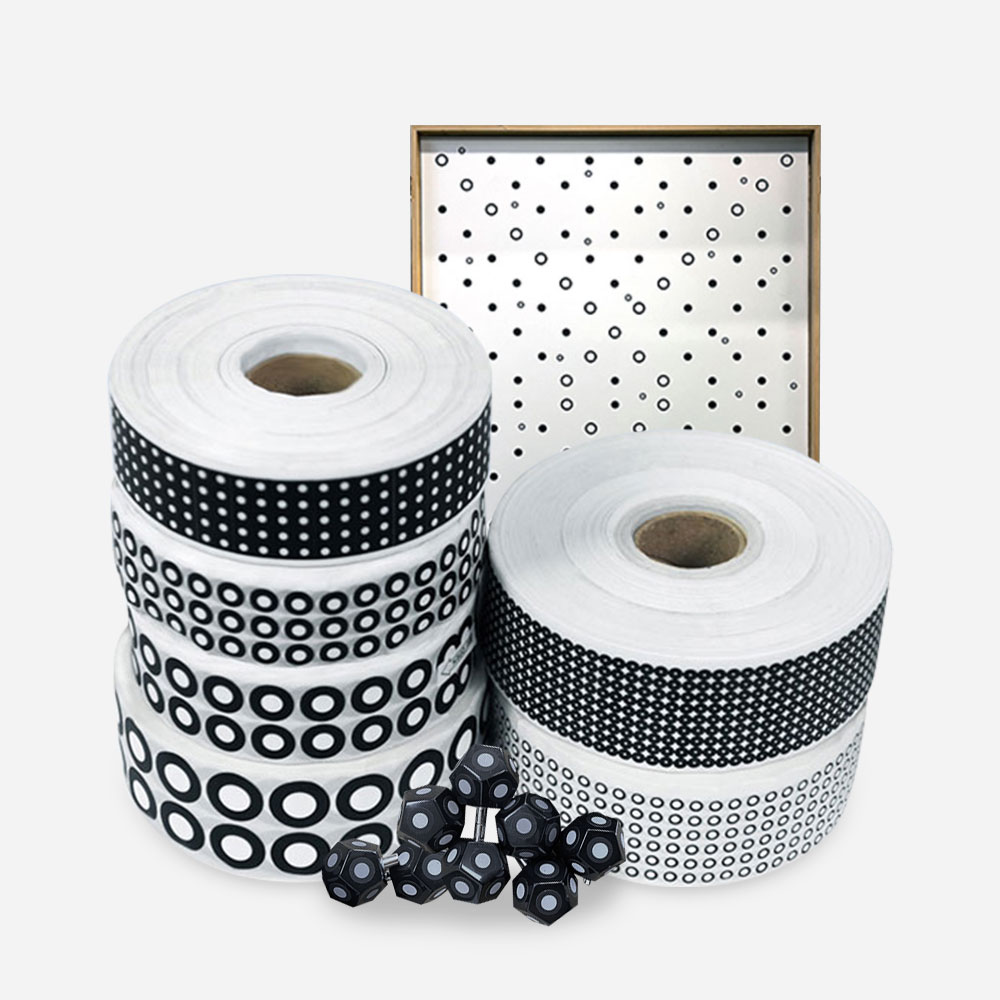
Adopting the HOLON 3D Model 49 handheld full‑blue laser industrial‑grade 3D scanner can specifically address the core challenges in aircraft windshield inspection. Featuring industrial metrology‑level precision and the strong material compatibility of full‑blue laser technology, this scanner can stably capture high‑quality data without any pre‑processing of the frame surface, eliminating distortion caused by material interference. Equipped with four scanning modes‑Standard Mode, Large‑Range Mode, Deep‑Hole Mode and Fine Mode‑it enables flexible switching according to diverse features such as the overall contour of the frame, assembly holes and edge details. Combined with its flexible handheld design, it is free from constraints imposed by frame structures, fully covering critical areas including the inner sides of holes and datum plane junctions to achieve dead‑zone‑free full‑feature scanning. The scanner’s high‑speed scanning capability greatly reduces the inspection time for each single part. Its non‑contact measurement method not only prevents damage to the frame surface but also rapidly acquires high‑density point cloud data, ensuring inspection efficiency and data reliability. Boasting exceptional adaptability, it delivers stable high‑quality data output in various environments such as repair shops and production workshops by merely attaching a small number of marker points for positioning, with no need for complex inspection platforms. Post‑scan data can be compared with the original model to generate clear 3D inspection chromatograms, accurately quantifying the distribution of various errors and scientifically judging frame qualification. It fully meets customers’ stringent inspection requirements and provides reliable digital support for quality control, maintenance calibration and production process optimization of aircraft windshields.

Scan the data chart
3‑D detection chromatogram