










- A +
- A
- A -
With the rapid development of industries such as automobiles, motorcycles, and aerospace, the demand for casting molds has also increased significantly. Casting molds are essential for casting processes, mainly including gravity casting molds, die-casting molds, and low-pressure casting molds. Among them, die-casting molds undergo rapid filling and solidification under high pressure, significantly reducing mold manufacturing time. Advances in casting technology provide more precise, complex, and high-quality castings for national pillar industries, promoting the overall improvement of China's manufacturing industry.
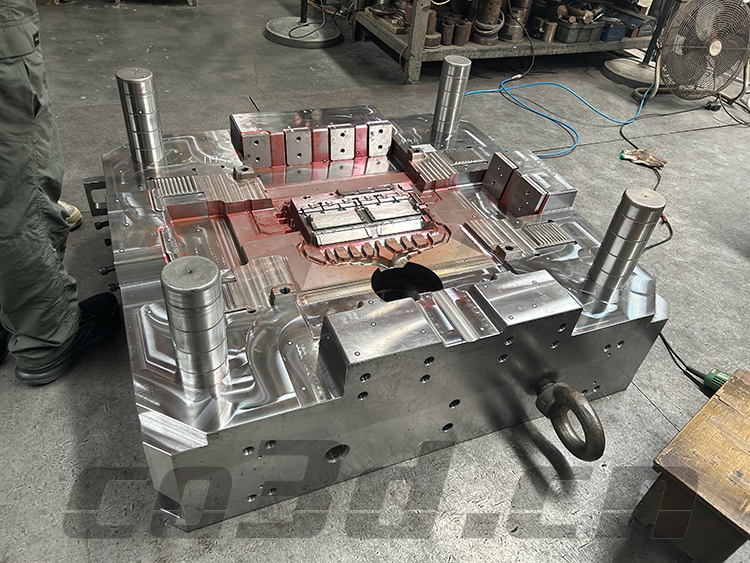
On-site physical image of die-casting mold
The die-casting mold is highly reflective, with a large shape, irregular and uneven surface, grooves of varying depths, and numerous four-sided hole positions, all of which increase the difficulty of scanning. The customer requires a rapid scan of the die-casting mold, and the scanning data demands extremely high precision.
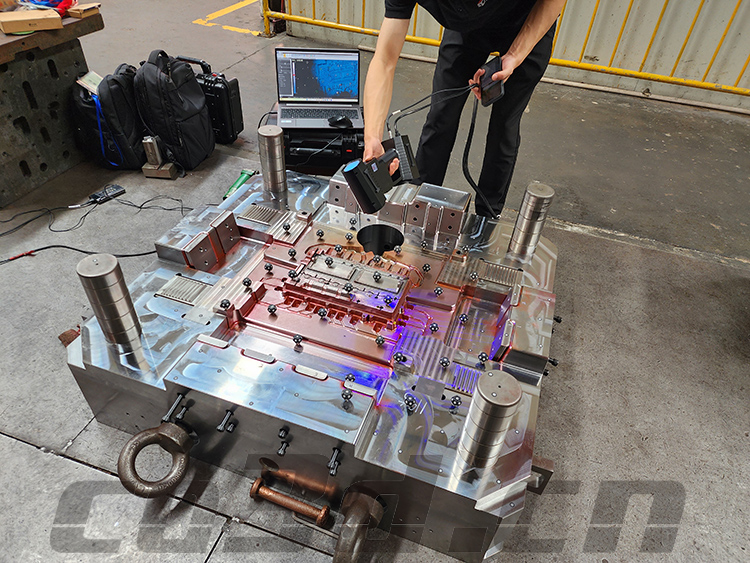
On-site scanned physical image of die-casting mold
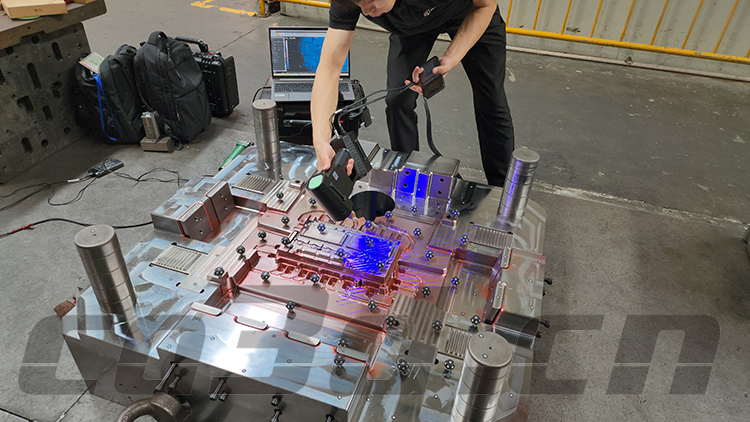
On-site scanned physical image of die-casting mold
Due to the large and bulky volume of the die-casting mold, the scanning data requires very high precision. Using traditional inspection methods for measurement is cumbersome, time-consuming, and prone to generating secondary errors. Therefore, Hualang's technical engineers propose a solution: using the Model 41, which has fast scanning speed, high scanning accuracy, small size, lightweight, and portability. It also has multiple scanning modes that can be switched. For deep holes and dead spaces, the scanner's fine mode can be used, resulting in small data errors and high precision. This successfully solves the problems faced by the customer.
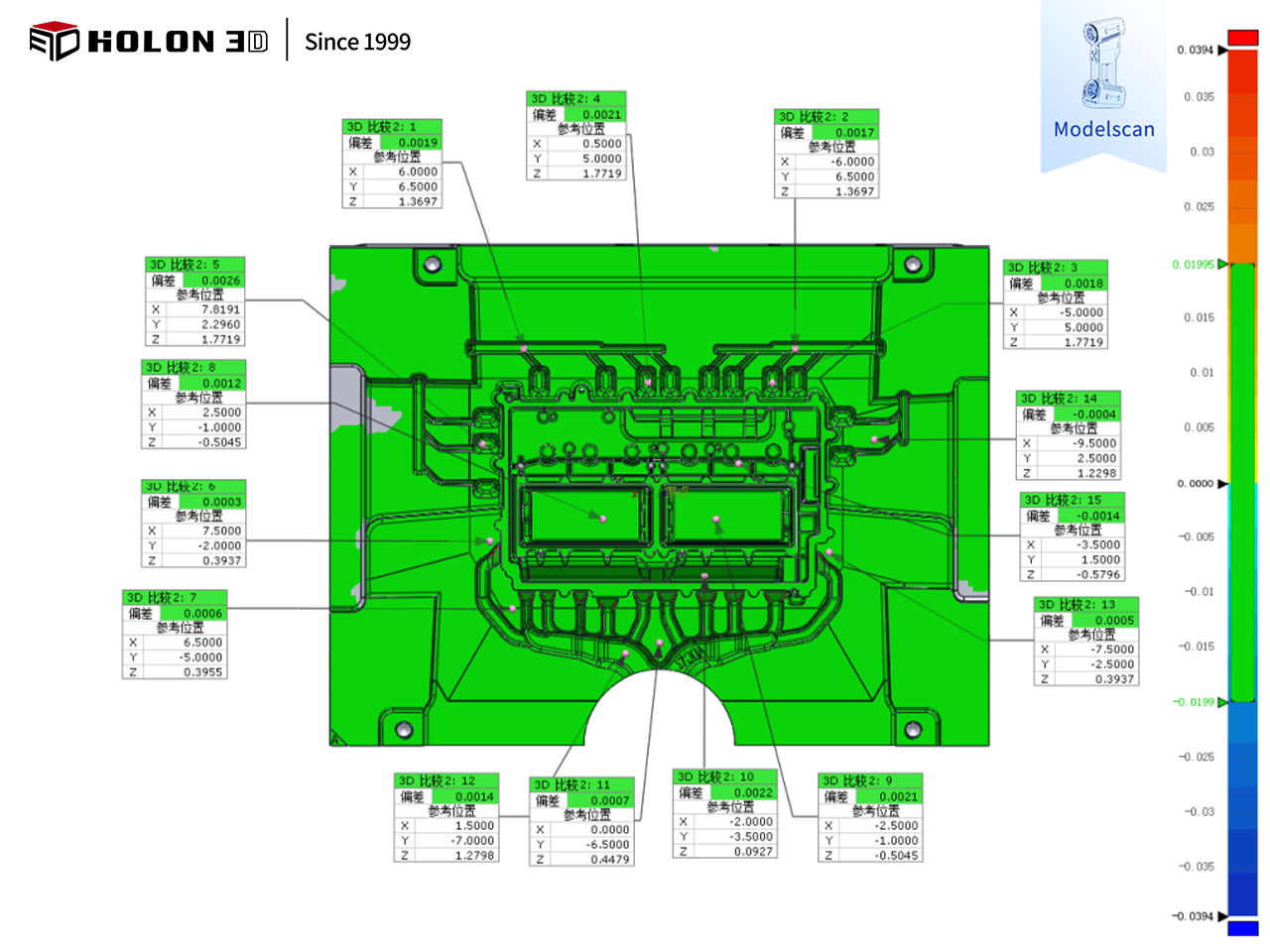
Comparative inspection diagram of die-casting molds
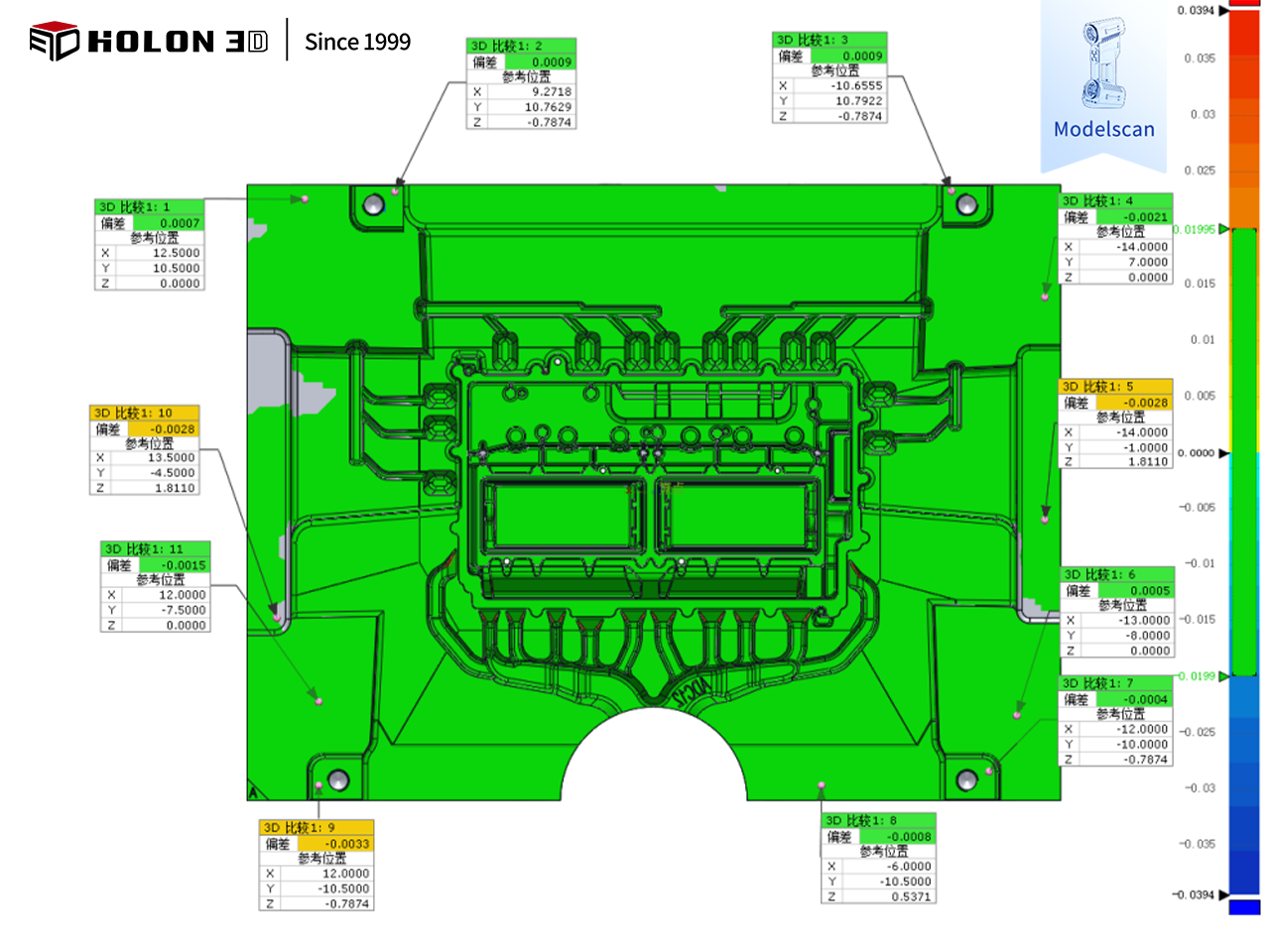
Comparative inspection diagram of die-casting molds
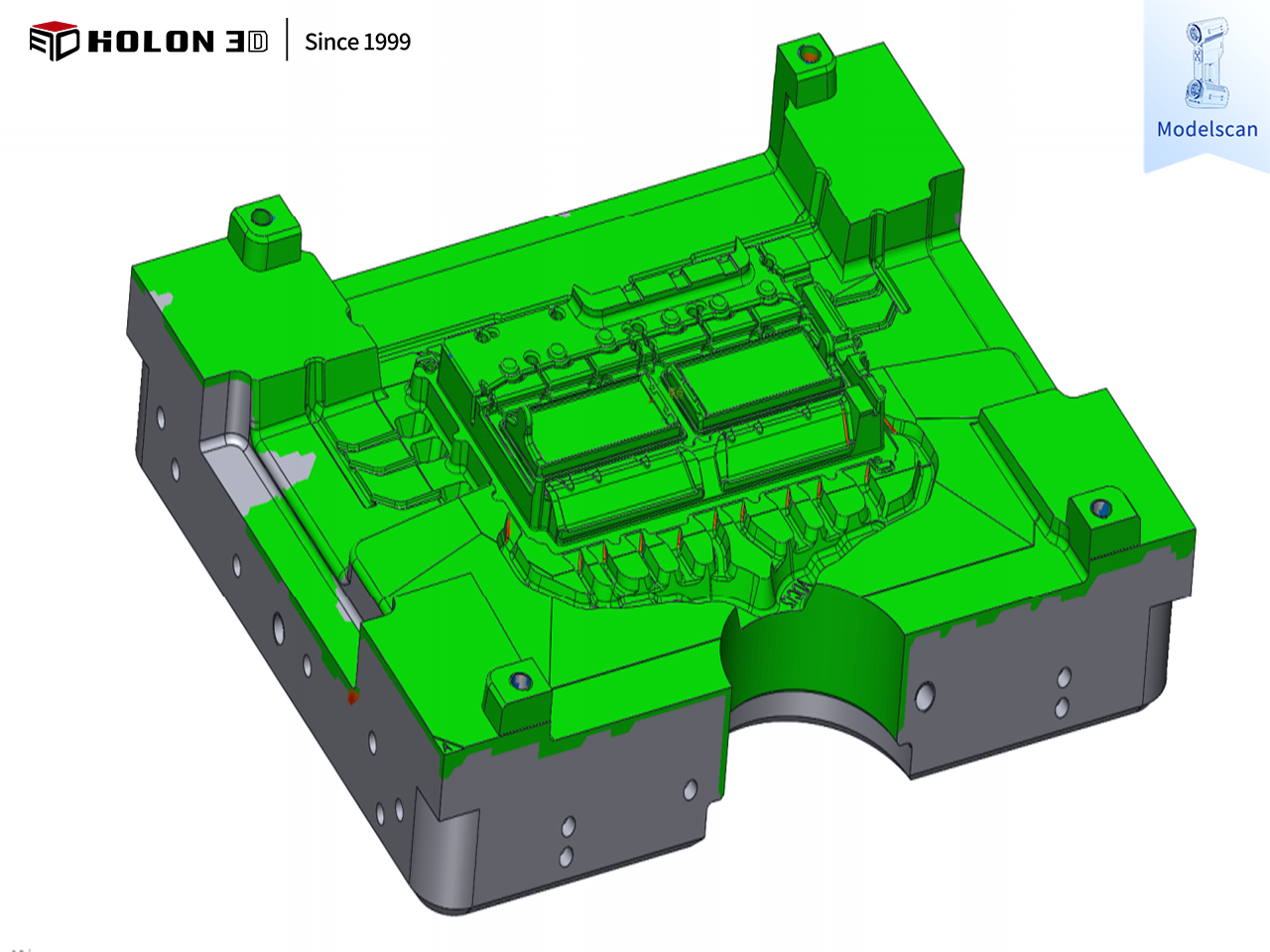
Comparative inspection diagram of die-casting molds