





- A +
- A
- A -
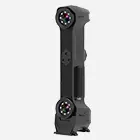
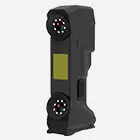
Bevel gears for differentials are core components of automotive transmission systems. Their internal spline teeth, external bevel teeth and complex involute curved surfaces impose extremely stringent requirements on manufacturing precision. The technical team of HOLON 3D performed non‑contact scanning on the gear using a high‑precision blue‑light 3D scanner. With the obtained full‑color high‑density point cloud data and professional reverse‑engineering software, the CAD model of the gear was perfectly reconstructed, and the customer’s requirements were successfully fulfilled.
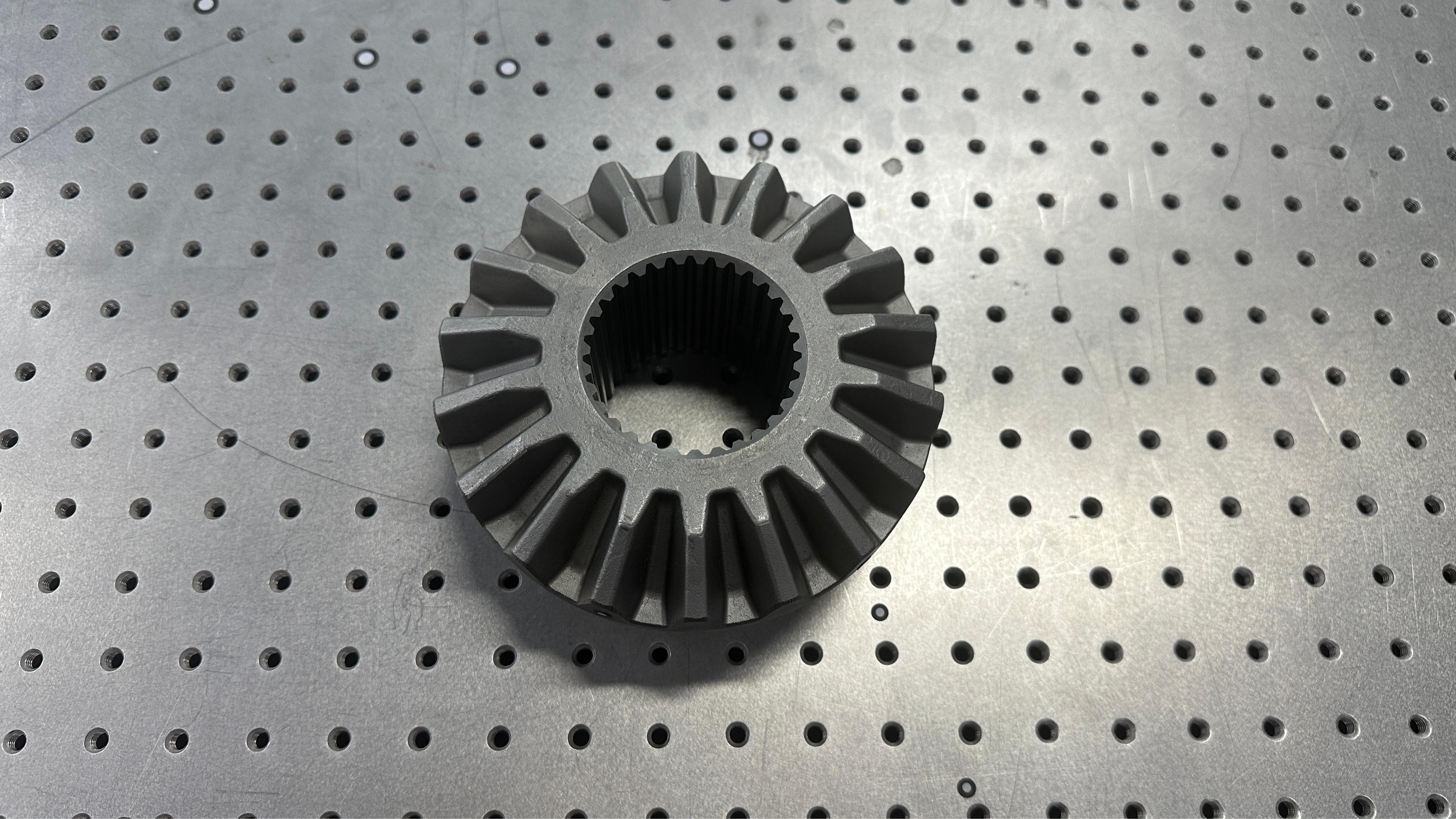
Physical picture of differential bevel gear
Bevel gears may seem simple, yet they demand high precision. The outer bevel teeth feature inclination angles, while the internal spline holes are deep and densely arranged. The probe of a traditional contact‑type coordinate measuring machine (CMM) can hardly reach deep into the interior and tends to scratch surfaces. This results in low measurement efficiency and frequent data blind spots.
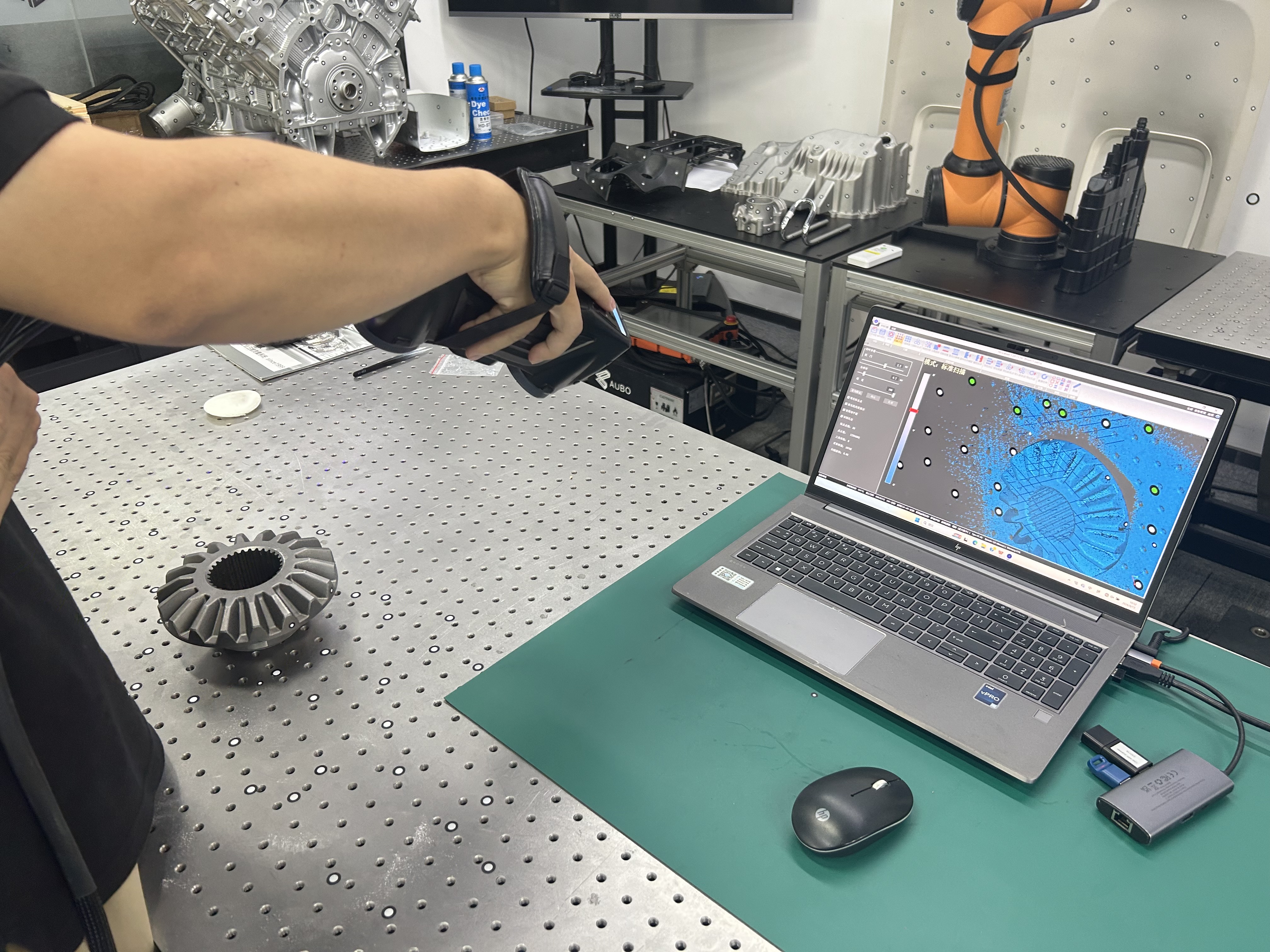
Scan of differential bevel gear
Engineers at HOLON use an industrial‑grade blue‑light 3D scanner. With a simple scan, complete 3D point‑cloud data of the gear’s outer bevel teeth, end faces and internal splines of deep holes can be rapidly acquired (with an accuracy up to 0.02 mm). Featuring non‑contact operation, full‑angle coverage and zero damage, high‑quality point clouds are obtained via noise removal and smoothing processing.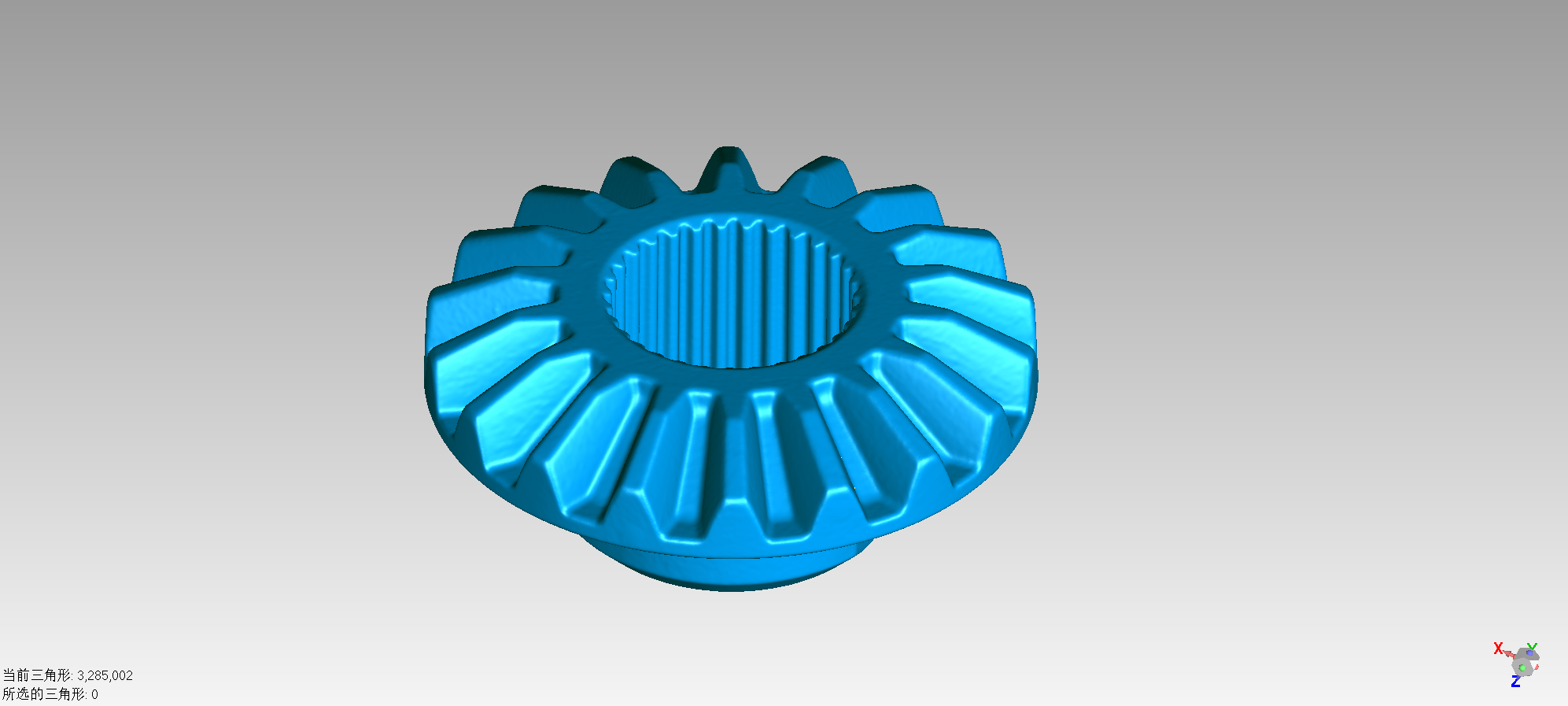
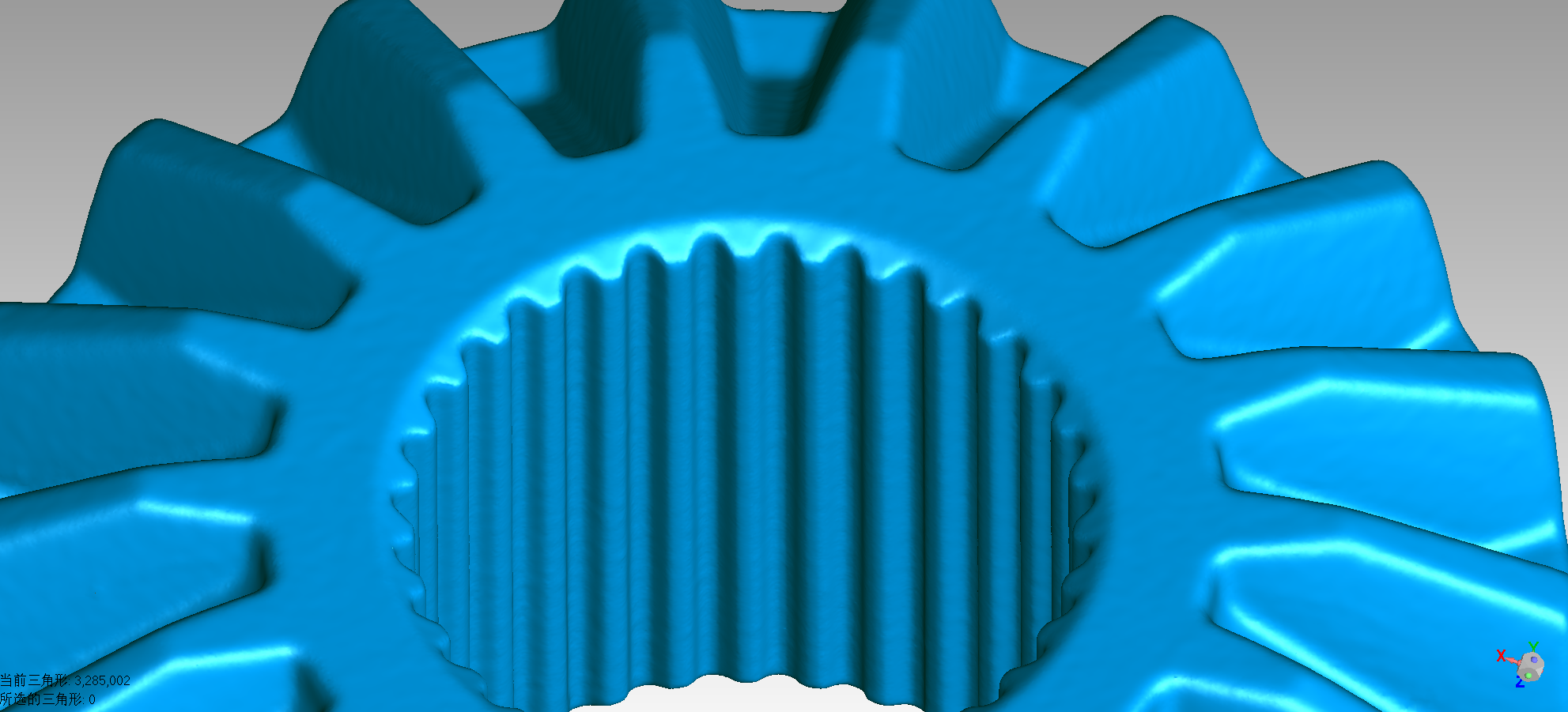
Scan the data graph
Import the point cloud data into professional reverse‑engineering software (such as Geomagic Design X). In accordance with gear design specifications, HOLON 3D engineers fit the real mesh features obtained from scanning with standard geometric bodies, and accurately extract the spline involute profile, tooth profile angle and central axis position. The CAD module is adopted for solid reconstruction to convert the scanned data into a parametric solid model.
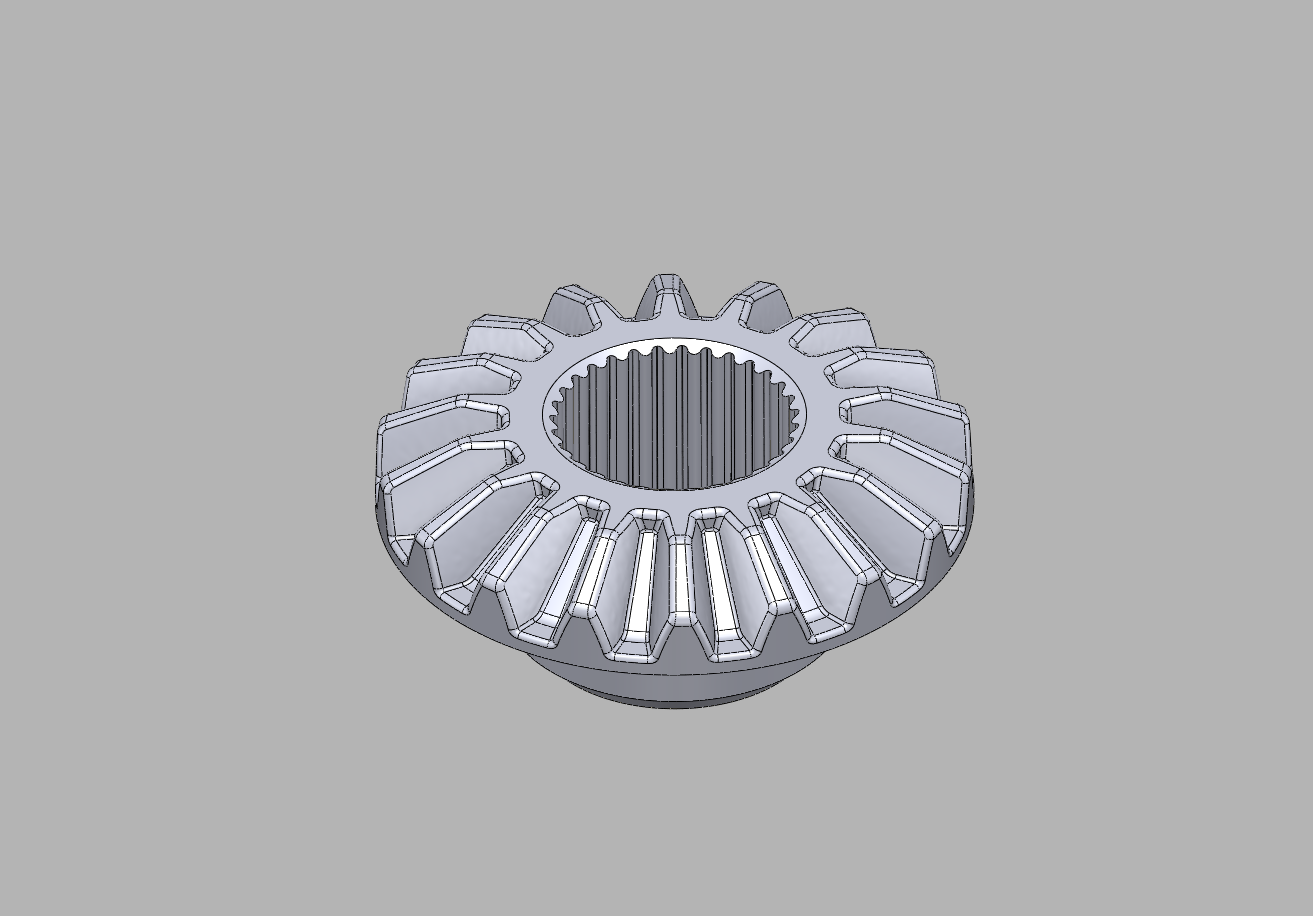
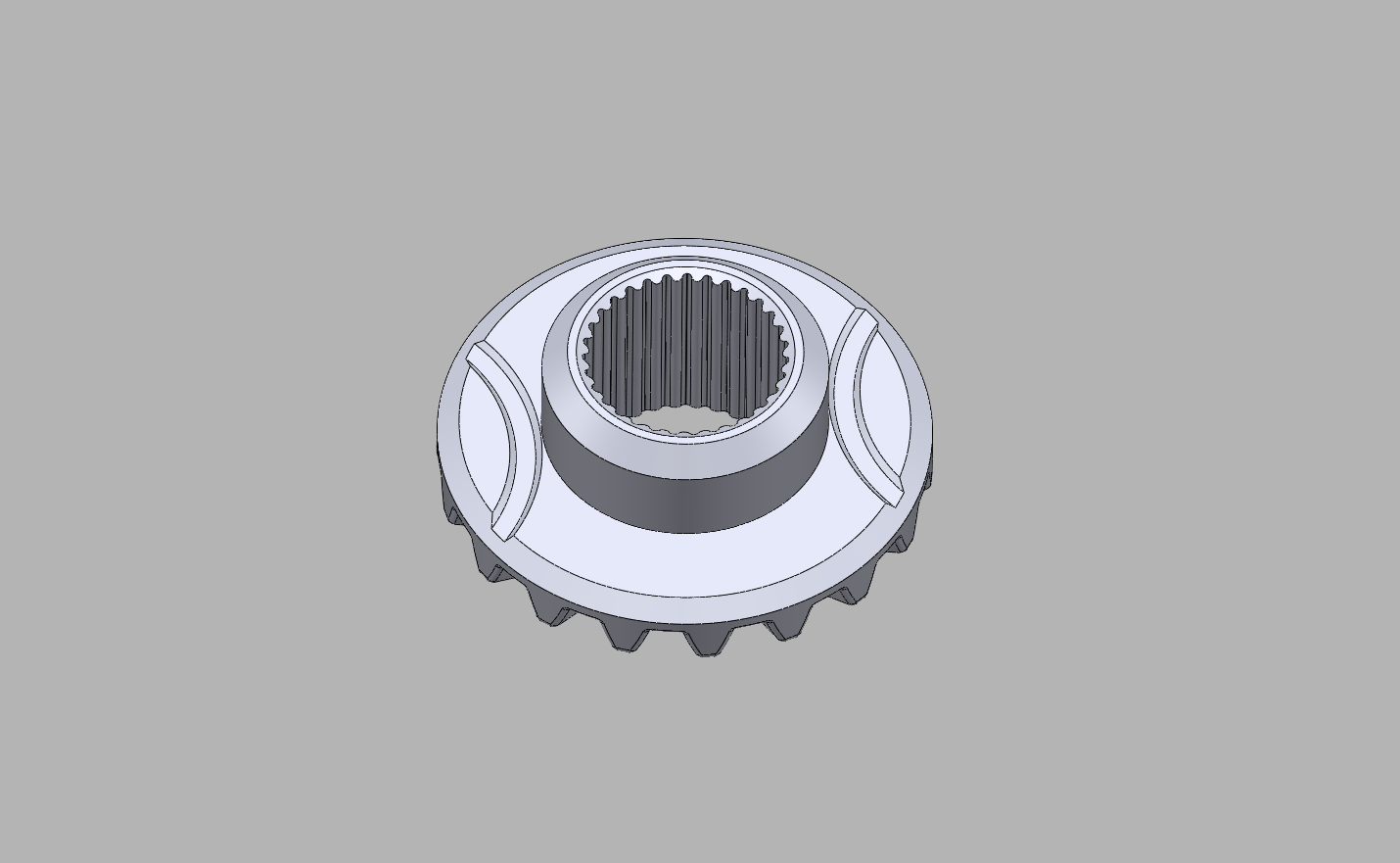
Reverse modeling drawing