




- A +
- A
- A -
Black plastic parts are widely used in automotive interiors, electronic and electrical appliances, medical devices and other fields. Plastic parts are usually finished with black matte or frosted surfaces featuring strong light absorption, which poses great challenges to traditional optical 3D scanning. Black surfaces have an extremely low light reflectivity (only about 3-5%), making it difficult for conventional scanners to capture fine structures such as snap barbs, positioning posts and tiny assembly holes. This results in missing data or excessive noise, which directly affects the accuracy of reverse design and the efficiency of mold development.
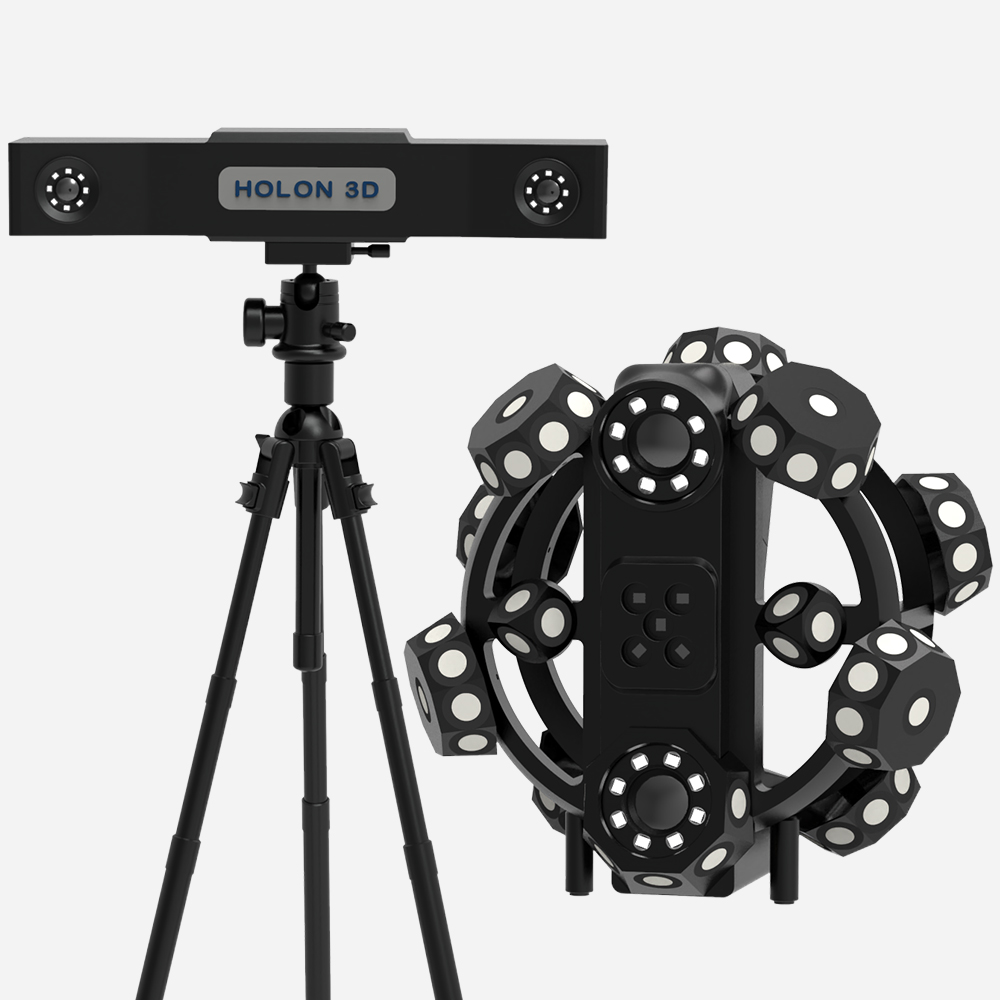
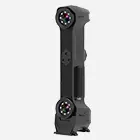
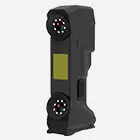
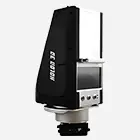
Holon 3D adopts full blue laser scanning technology. It can directly penetrate black light-absorbing surfaces without powder spraying and fully acquire 3D data of complex plastic parts, providing reliable data support for product reverse engineering, mold modification and quality inspection.
Black plastic parts have strong light absorption on their surfaces. Conventional scanners struggle to capture complete data, resulting in missing fine structures such as snaps, undercuts, and positioning posts. Traditional inspection methods are low in efficiency and cannot meet the requirements of reverse remodeling.
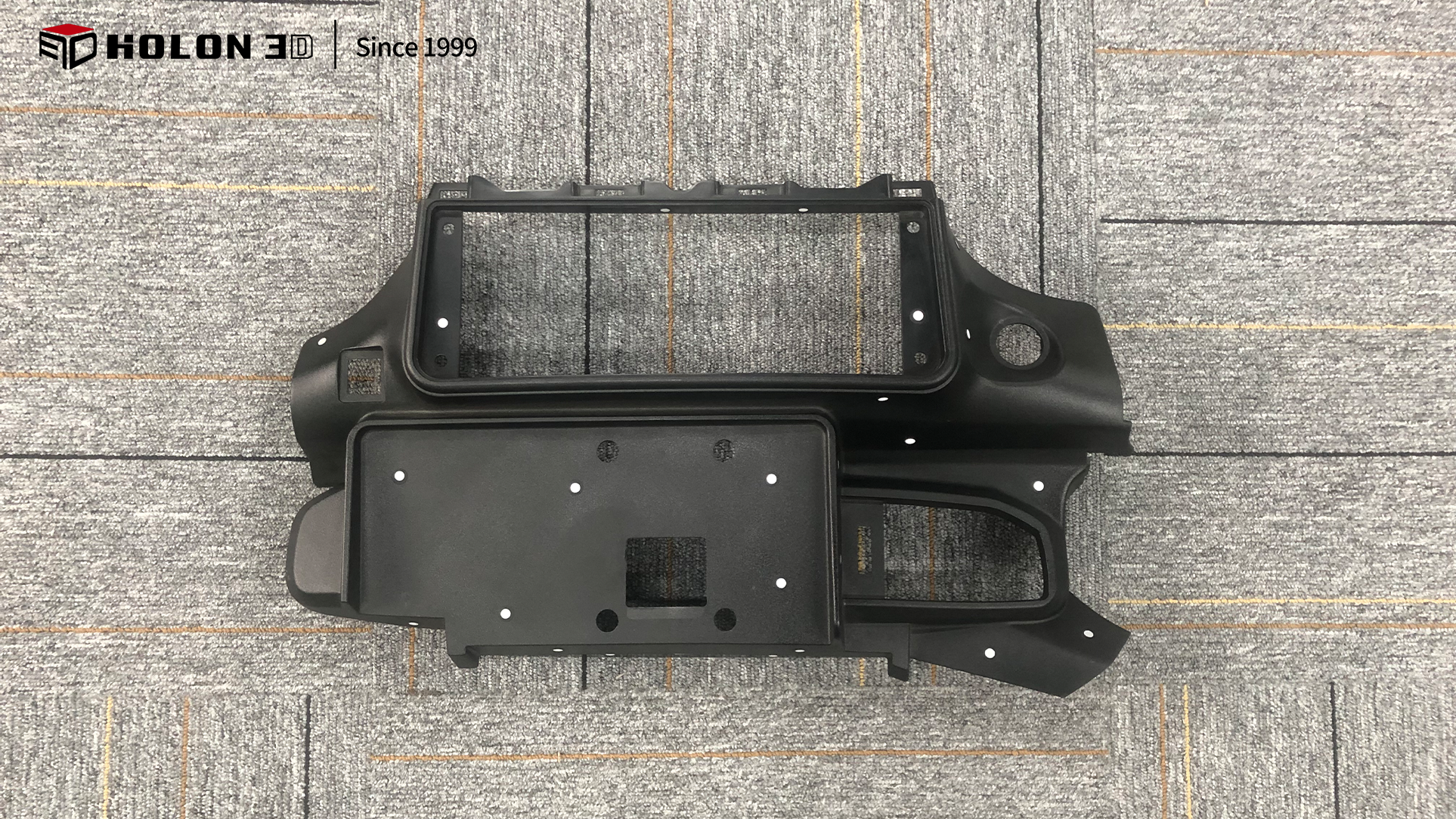
Physical Photo 1
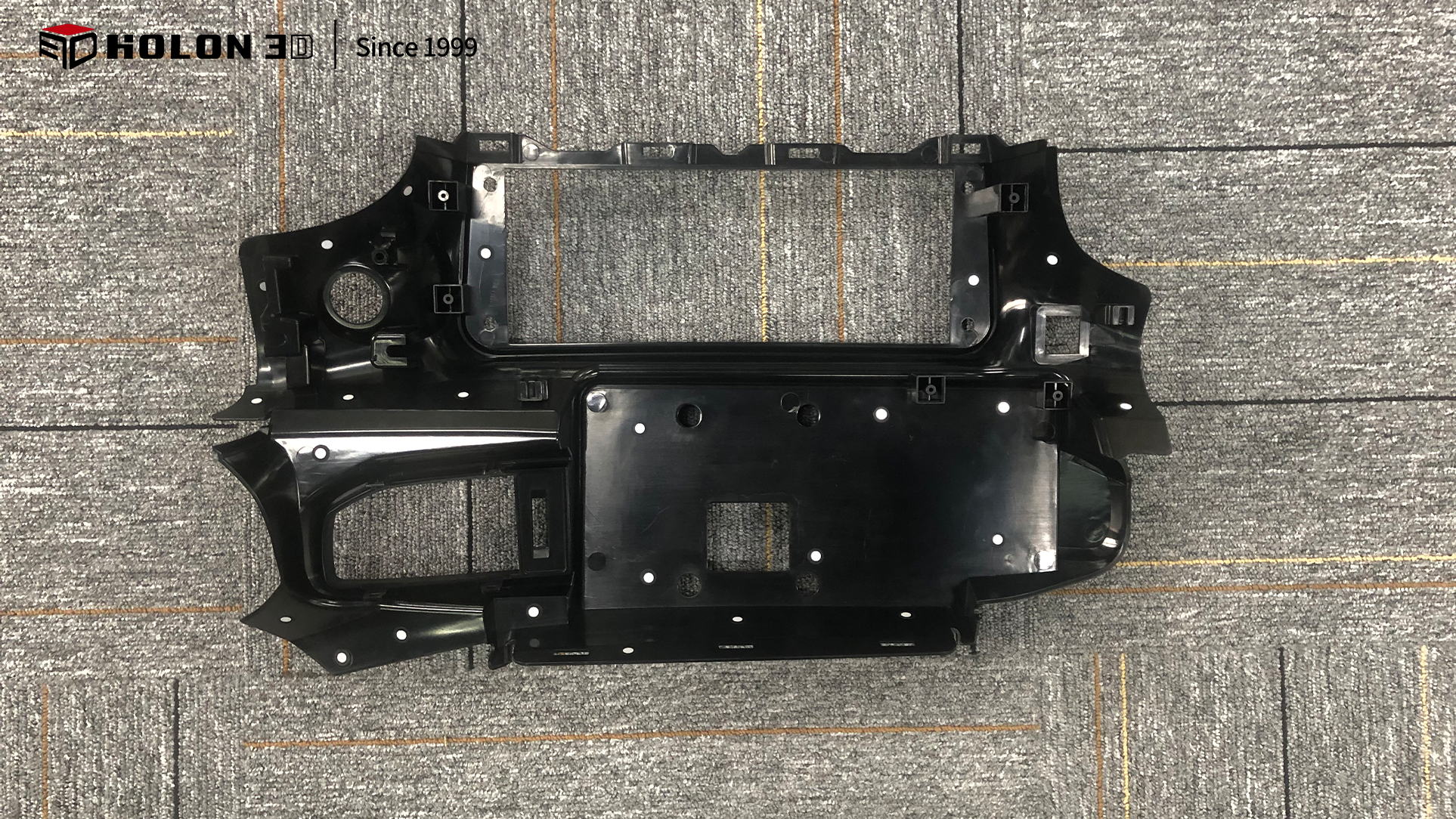
Physical Photo 2
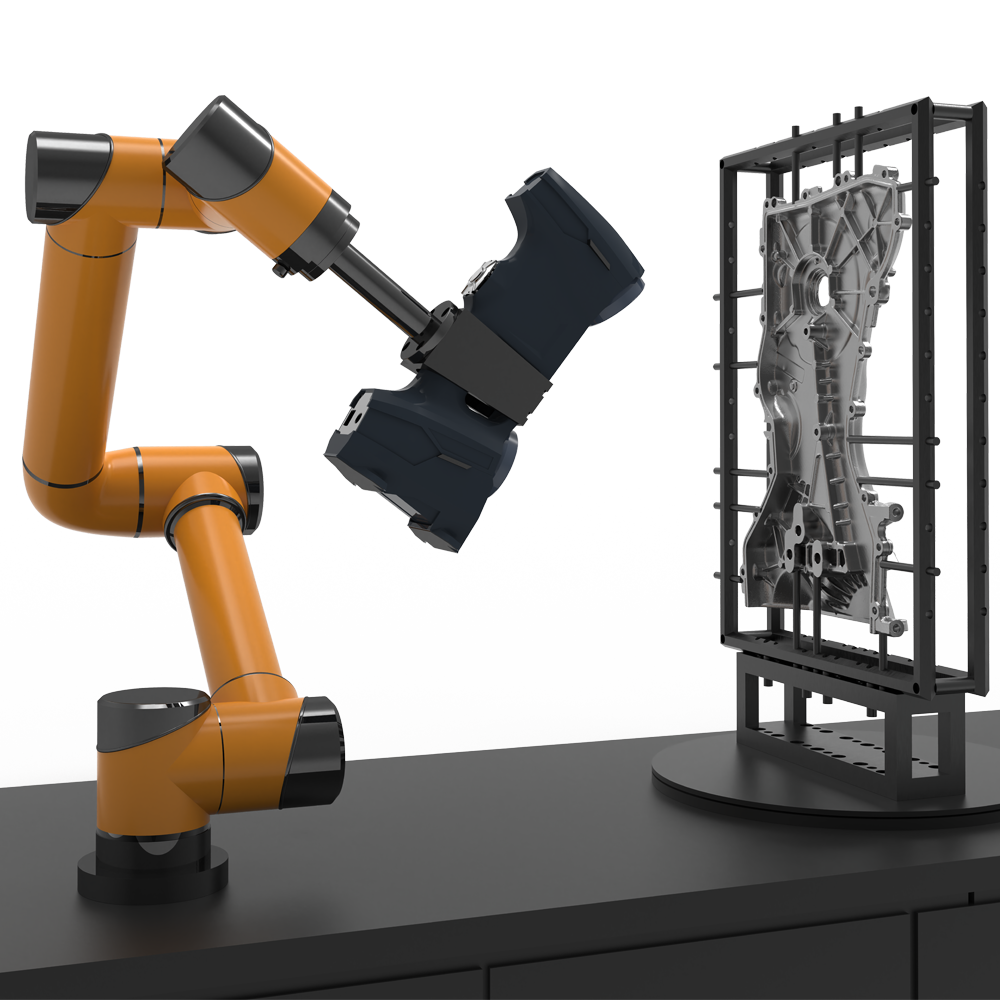
Holon engineers adopt the Holon3D handheld laser scanner. The blue laser can penetrate black surfaces directly without powder spraying, with an accuracy of up to 0.01 mm. It precisely restores microstructures such as snap barbs and positioning posts, capturing 4.2 million points per second. Full-dimensional data acquisition can be completed within 10 minutes, boosting efficiency by over 70%. The scanned data is imported into software for 3D comparative analysis against the original digital model to generate a color difference deviation report, or applied to reverse design modification.
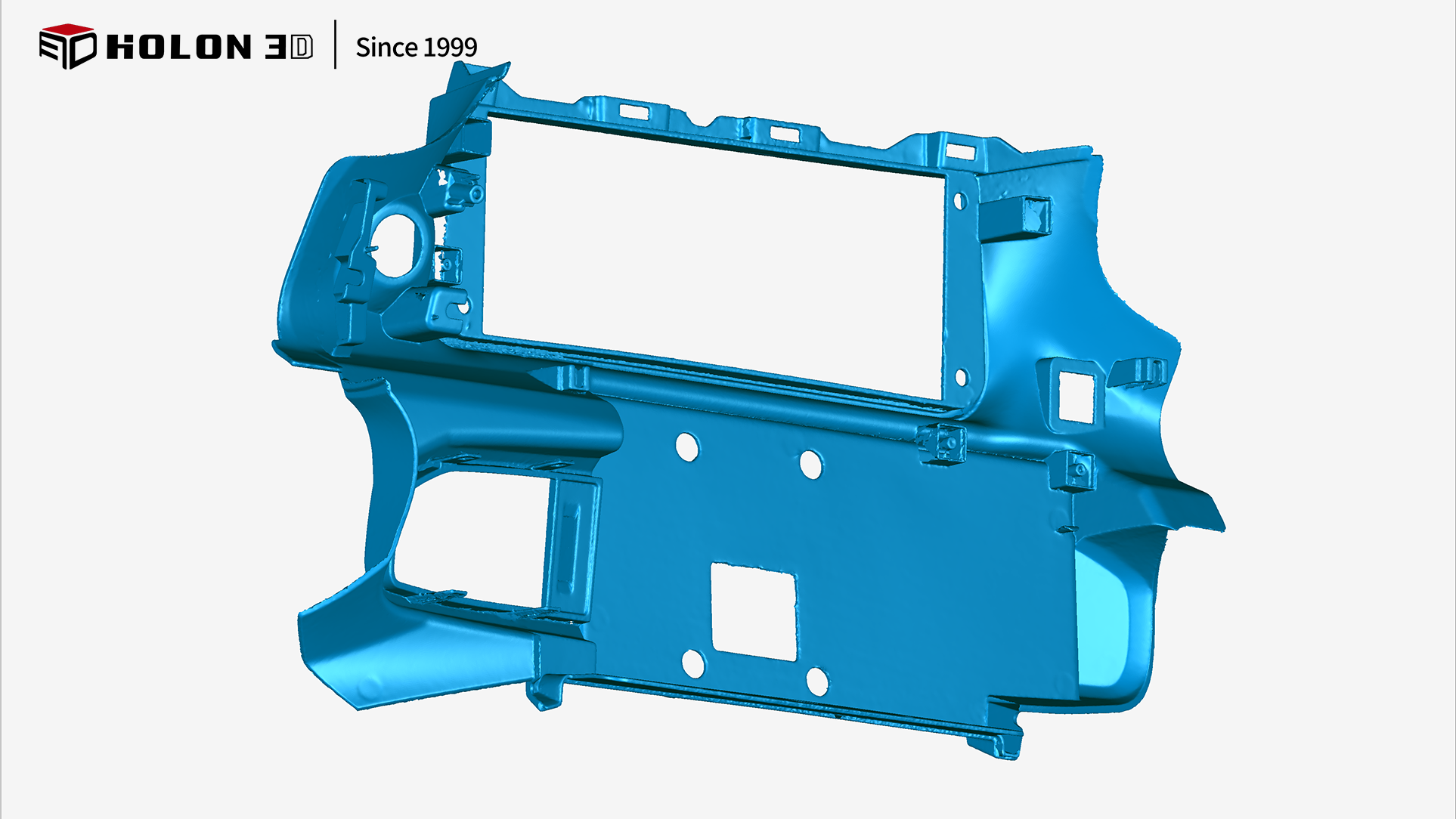
Scan Data 1
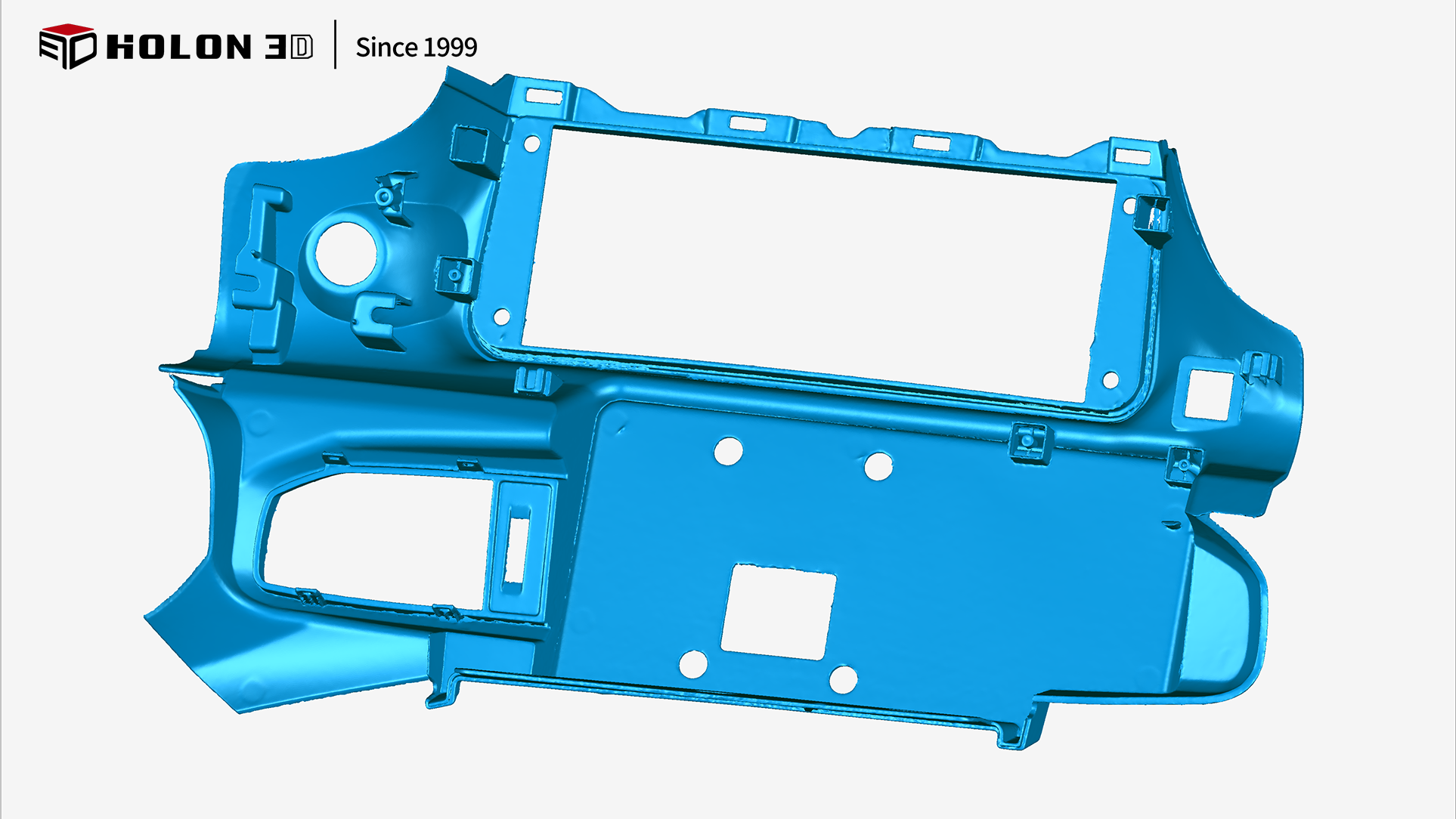
Scan Data 2
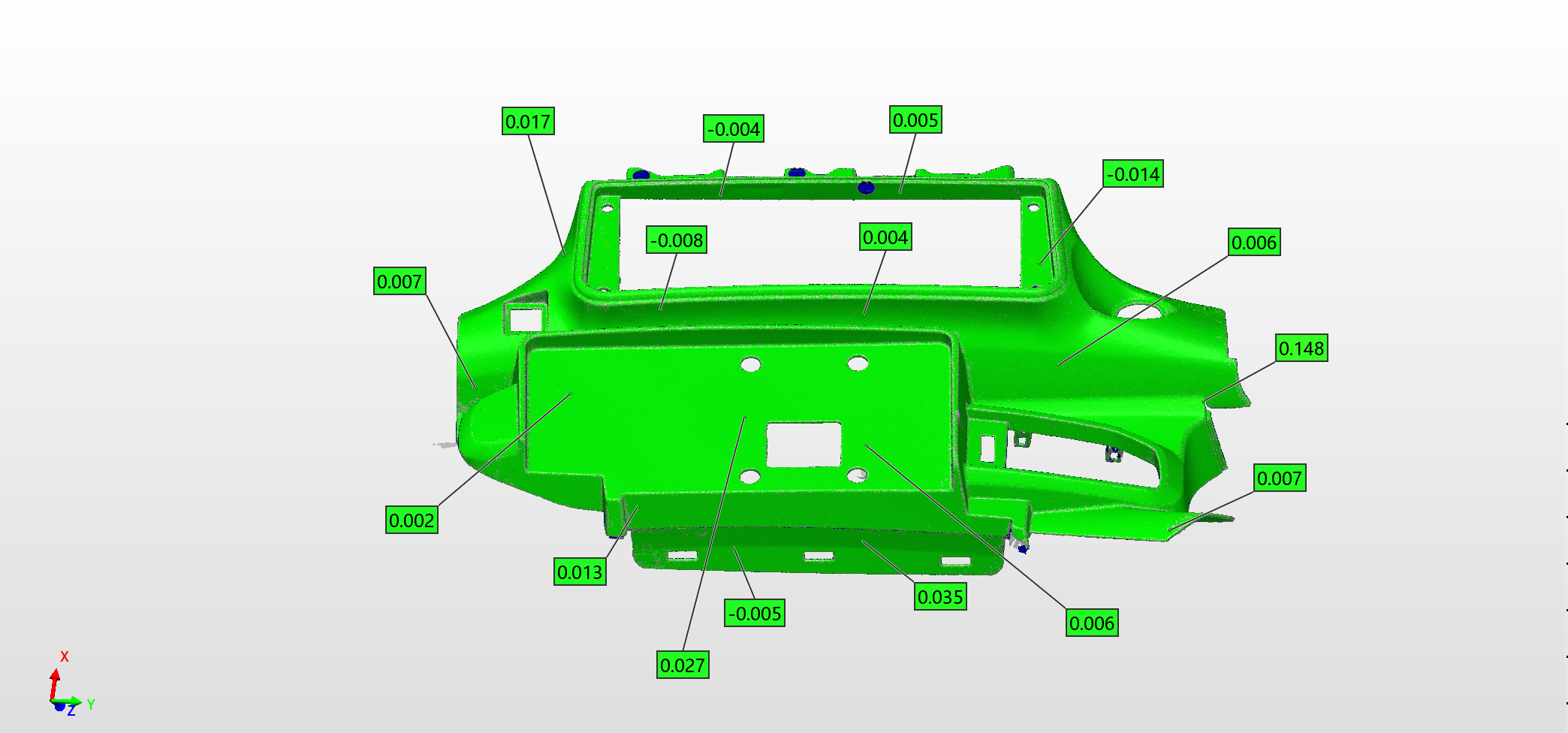
Deviation Chromatogram 1
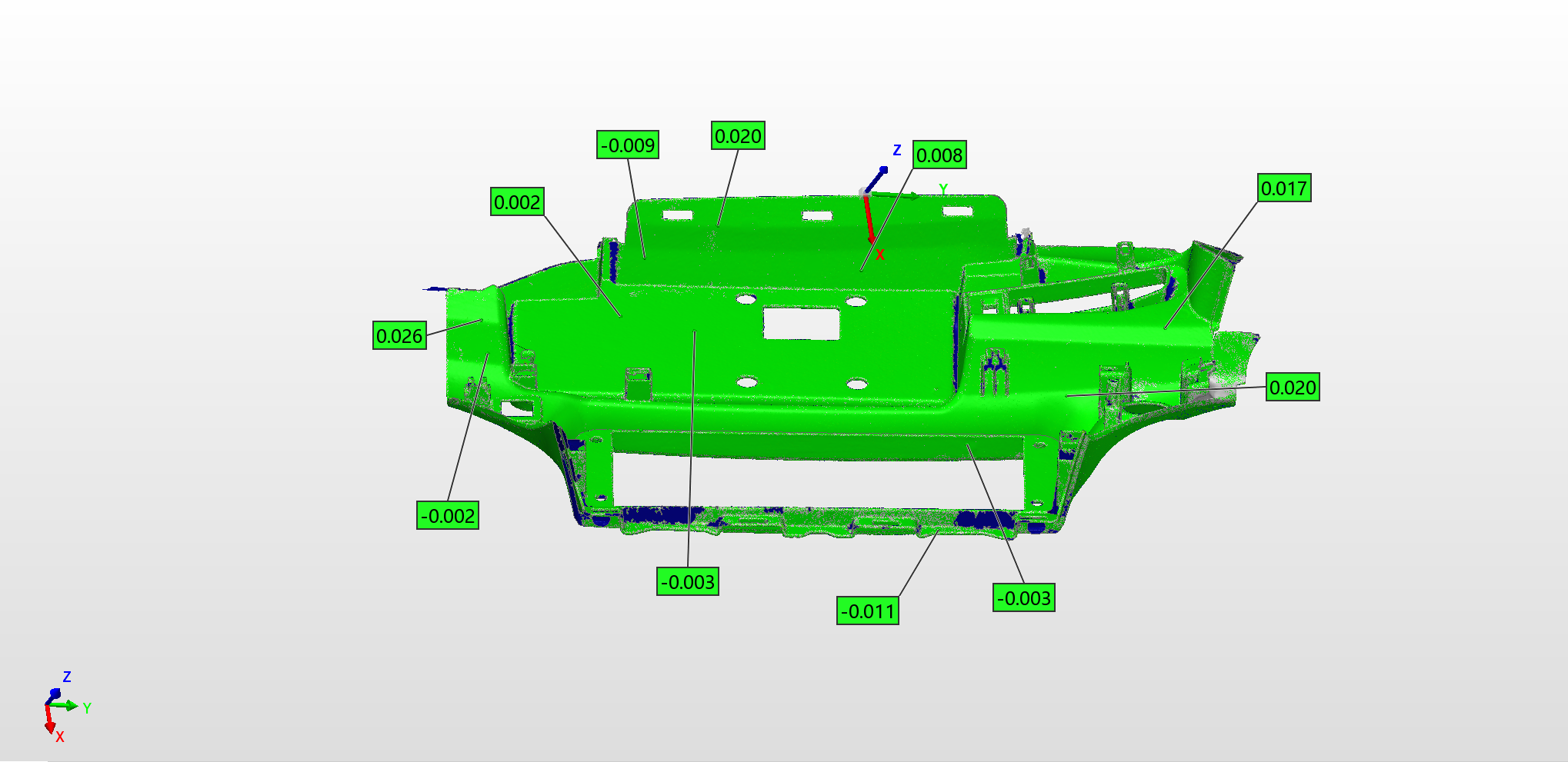
Deviation Chromatogram 2