





- A +
- A
- A -
The function of an automobile anti‑roll bar is to reduce vehicle body roll during turning and improve riding comfort. Most front suspensions, ranging from compact passenger cars to heavy‑duty trucks, are equipped with stabilizer bars. Since the design must avoid other surrounding components, stabilizer bars come in a wide variety of forms, yet basically feature an integrated structure of torsion arms and a torsion bar. In addition, there are two types of cross‑sections for the material: solid and hollow. The use of hollow materials, which are beneficial for weight reduction, is steadily increasing, and accordingly, market demand and application volume for automotive anti‑roll bars are also rising.
A well‑known domestic and overseas auto‑parts manufacturer measures the three‑dimensional data of anti‑roll bars. The acquired 3D data is compared with the original data for inspection to generate a highly intuitive 3D inspection chromatogram. Based on the comparison report, the overall deviation between the actually manufactured anti‑roll bar and the original design drawing can be clearly observed, making it easy to identify errors in the workpiece.

Scanned physical photo of the automobile anti‑roll bar

Scanned physical photo of the automobile anti‑roll bar
Practical problems
Detect deviations by extending from the symmetry center of the vehicle anti‑roll bar toward the two opposite sides. Inspect wear and deformation at the joints between the lever arms of the vehicle anti‑roll bar and the vehicle. For the curved section of the vehicle anti‑roll bar, too many points should not be attached to its surface, as this will affect surface features and cause detection deviations. Traditional detection methods are time‑consuming, difficult to perform, and prone to detection deviations.
Scanned physical photo of the automobile anti‑roll bar
Scanned physical photo of the automobile anti‑roll bar
Co3d solution
1. Perform spot scanning around the automobile anti‑roll bar. Extend the scanning from the central axis outwards to both sides, conduct automatic registration of point‑cloud data, and capture the surface features of the anti‑roll bar through scanning.
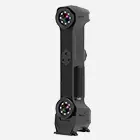
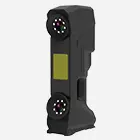
2. Technical engineers at Hualang 3D used the handheld 3D scanner A22 to quickly acquire 3D data of the automobile anti‑roll bar, improving work efficiency. This handheld device is convenient and flexible with a lightweight, portable design. It delivers responsive and easy‑to‑operate performance. Equipped with 22 laser beams, it features fast scanning speed, multi‑mode switching, high scanning accuracy, strong stability, and a wide range of application fields.
3. Import the data into 3D software for comparative inspection and data processing. The customer’s problems were successfully resolved, meeting the accuracy requirements and expected results specified by the client. It accelerated the customer’s production and processing efficiency and saved substantial time costs for manual inspection.
 3D‑scanned STL data drawing of automobile anti‑roll bar
 3D Scanning Comparison Inspection and Analysis Diagram of Automobile Sway Bar