






- A +
- A
- A -
Aviation helmets not only significantly reduce the pilot's workload—allowing them to focus on combat operations—but also integrate sighting systems, communication equipment, and displays for flight data. Furthermore, in the event of an accident, the helmet protects the pilot during ejection. 3D scanners are used to capture the helmet's 3D data, enabling structural improvements and enhanced performance.
1. The complex internal structure of the aviation helmet—featuring numerous curved surfaces and recesses—makes scanning difficult.
2. Traditional measurement methods fail to capture sufficient data density; they are unable to measure the helmet's curved surfaces and contours, preventing proper inspection and making subsequent reverse engineering impossible.
1. Case Requirements:
The client needs to develop a new aviation helmet and requires 3D data from an existing helmet for reference.
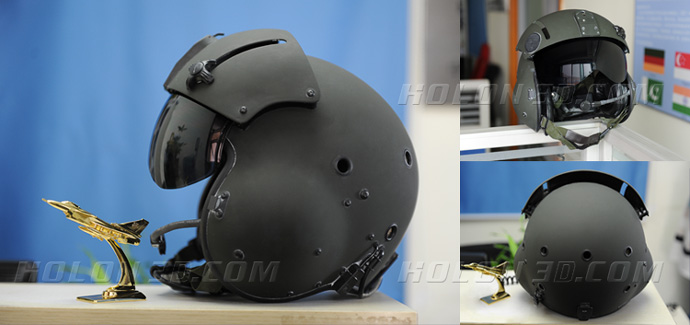
Aviation helmet
2. Customer-specified precision:
0.02 mm
3. Actual scanning precision:
<0.02 mm
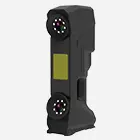
Aviation helmets are characterized by complex geometries, small production batches, significant variations in specifications, and stringent reliability requirements. Consequently, finalizing the product design is a complex and precise process that often entails multiple rounds of design, testing, and refinement—resulting in high costs and long lead times. Hualang 3D engineers proposed a solution integrating the HL-3DSV 3D scanner (to rapidly capture high-precision 3D data of the helmet) with reverse engineering software (to convert point cloud data into triangular mesh data) and mainstream design software for post-processing, thereby accelerating the redesign process. This approach enables the rapid fabrication of prototypes and the simulation of the helmet's final form (including functional and surface geometries), facilitating product testing, assembly trials, evaluation, and functional demonstrations. Compared to traditional manufacturing methods, this process reduces production time by approximately 25%. Furthermore, Hualang 3D’s additive manufacturing process is unconstrained by shape or structure, allowing for the rapid creation of complex forms without the need for molds. The resulting products offer high precision, exquisite detail, and superior surface quality that meets aerospace technical standards, while also achieving a degree of weight reduction.
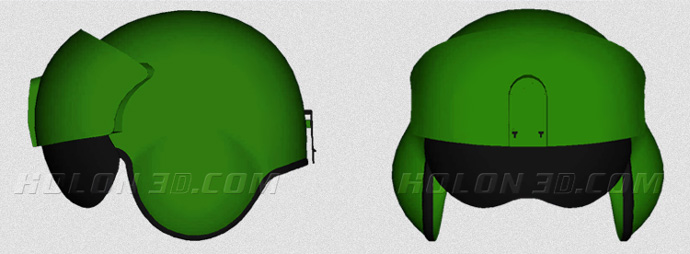

3D data of aviation helmets