





- A +
- A
- A -
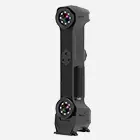
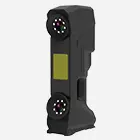
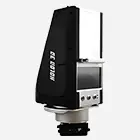
As a core component of sealing devices, silicone sealing rings have their sealing performance directly affected by dimensional accuracy and morphological integrity. The customer needs to perform 3D data acquisition on these sealing rings and detect errors through 3D comparison with the machining model so as to guarantee product quality. Given the black‑colored surface of the sealing rings with abundant fine features, together with the customer’s strict requirements for scanning speed and accuracy, traditional measurement methods cannot satisfy such demands. Therefore, the HOLON 3D smart 49 handheld 3D scanner is selected to deliver accurate data support for quality inspection and process optimization of the sealing rings.
Scan on site
The surface of silicone sealing rings is black and tends to absorb light. Conventional optical measurement is prone to missing or blurry data, making it difficult to clearly capture their fine‑scale structures. Moreover, sealing rings have numerous detailed features, such as the curvature of lip edges and the dimensions of grooves. Traditional measuring tools require manual operation point‑by‑point, which results in extremely low efficiency. Besides, operational errors may cause deviations in critical dimensions, failing to meet the requirements for high‑precision inspection. In addition, silicone is a relatively soft material, so contact‑based measurement may deform the components and further impair data accuracy. Meanwhile, traditional measurement data must be manually organized before comparison with the processing model. This cumbersome process severely limits the efficiency and accuracy of error detection.

Scanning data diagram of a single silicone sealing ring
Comparison Data Chart for a Single Silicone Sealing Ring
The HOLON 3D smart 49 handheld 3D scanner enables efficient and‑accurate 3D data acquisition for silicone sealing rings. Featuring excellent optical adaptability, this scanner can effectively tackle the light‑absorption issue of black surfaces by adjusting laser brightness. It clearly captures detailed features such as the lip curvature and groove dimensions, accurately reconstructing the actual geometry of the sealing ring and meeting the accuracy requirements for comparison with the machining model. Its high‑speed scanning capability greatly shortens data‑acquisition time and rapidly obtains full‑surface information to satisfy the client’s efficiency‑related demands. The non‑contact scanning method prevents squeezing of the soft silicone material caused by physical contact, avoids deformation of the part, and guarantees authentic data. The flexible handheld operation can easily cover the entire structure of the sealing ring and ensure no detailed features are missed. The generated 3D scanning data is complete and precise, fully satisfying the client’s requirements for 3D comparison against machining models and error inspection. It provides a reliable digital foundation for quality control and production‑process optimization of silicone sealing rings.

Scanned data diagrams of multiple silicone sealing rings

Comparison Chart of Multiple Silicone Sealing Rings