









- A +
- A
- A -
The power engine that comes with the high-pressure washer has a compact structure, complex curved surfaces on the casing, and densely packed holes, making it a core component of the machine. Customers, due to product upgrades, spare part replication, or lack of original drawings, need to collect full-size 3D data of the entire engine and key casings and reverse-engineer it into an editable CAD model. This serves as a basis for later mold development, structural optimization, and assembly verification.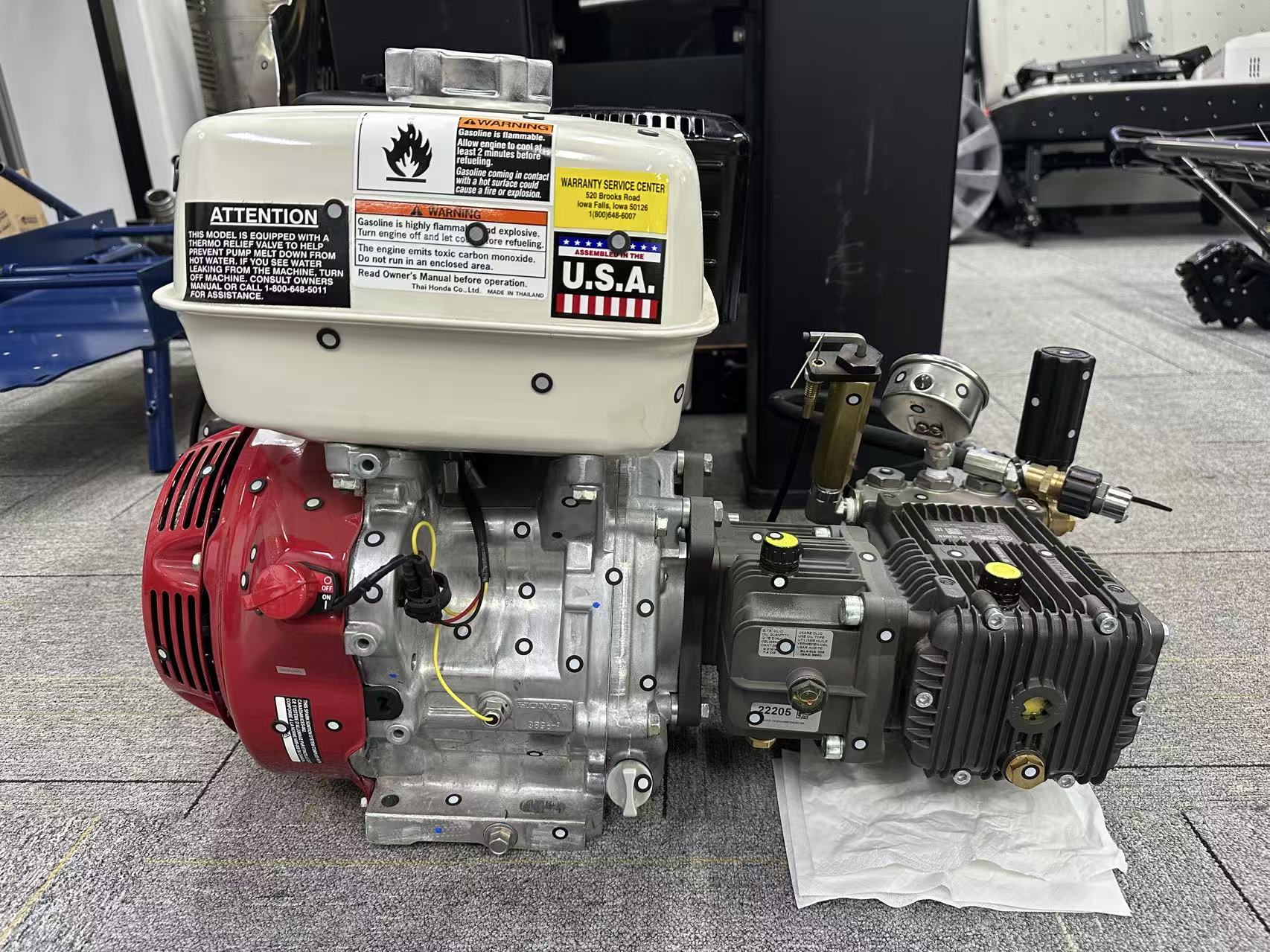
High-pressure washer engine diagram
Engine blocks, crankcases, cooling fins, and mounting flanges have a lot of bolt holes, oil ports, and uneven surfaces. Traditional calipers can't get continuous surface data, and CMM probes struggle to reach the bottom of deep holes and tight angles. Measuring point by point manually takes a long time and adds up to big errors.
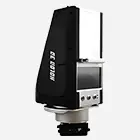
Using the HuaLang 3D handheld laser scanner, we quickly cover the body in wide mode, switch to fine mode to capture cooling fins and flange surfaces, and use deep-hole mode to specifically scan bolt holes, oil passages, and other deep cavities, fully obtaining high-density point cloud data with a single scan accuracy of up to 0.02mm. The scan data is denoised and packaged into an STL mesh model, then imported into reverse engineering software like Geomagic or Imageware for surface reconstruction, and finally brought into UG, SolidWorks, or Pro/E to rebuild parametric solid features (restoring hole positions, coaxiality, draft angles, and other design intents), ultimately outputting CAD models in STEP/IGS format.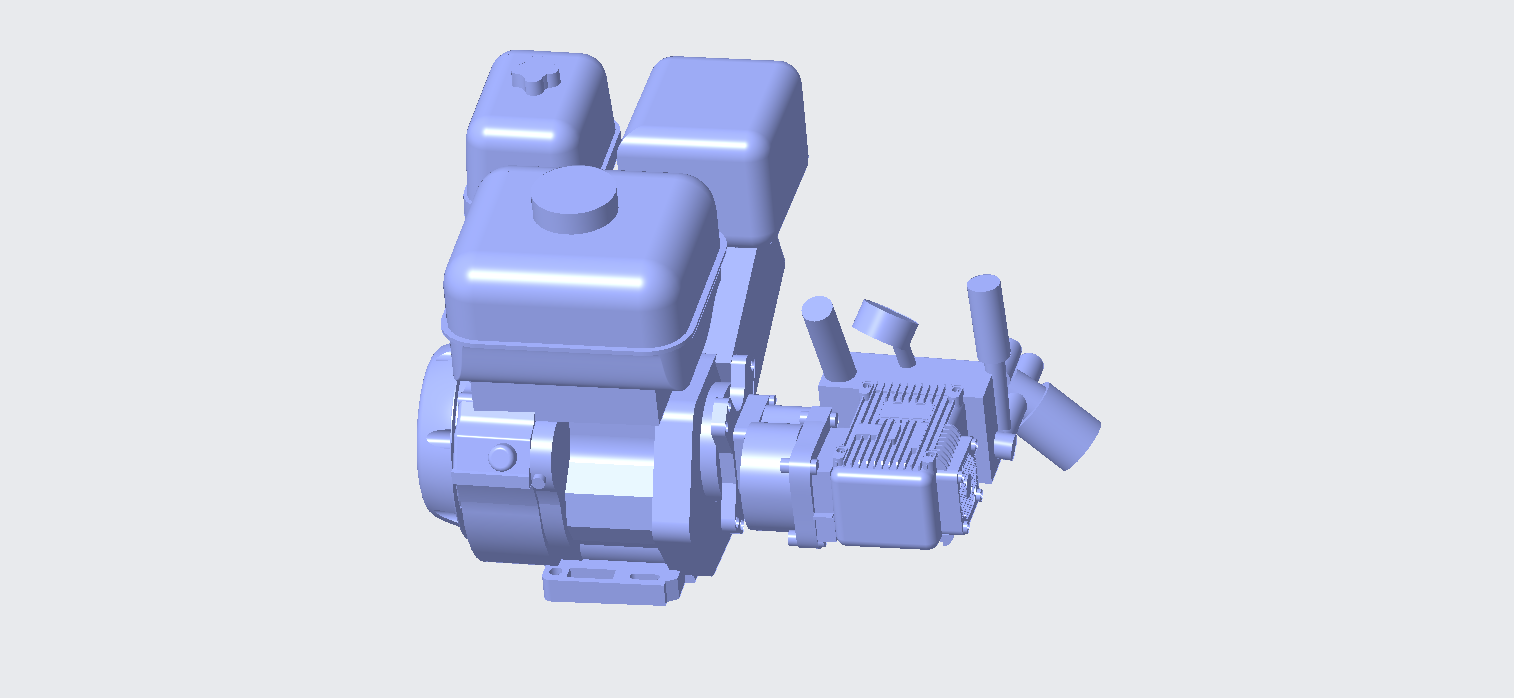
Reverse engineering an STP diagram
Compared to traditional manual surveying, the cycle is shortened by over 80%, and the resulting digital model can be directly used for CNC machining, mold design, virtual assembly verification, and finite element analysis, solving the pain point of 'difficulty in modifying or copying without the original drawings'.