





- A +
- A
- A -
To accelerate the R&D of new products, a plastic housing manufacturer needed to conduct reverse engineering analysis; however, as traditional measurement methods could not rapidly capture data from complex curved surfaces, the company adopted HOLON 3D scanning technology to establish a digital R&D system.
Photos from the scene
The client's molded plastic part features a black matte finish; its high light-absorbing properties prevent conventional 3D scanners from capturing shadowed features such as snap-fit undercuts and locating pins. Additionally, light scattering around tiny assembly holes generates noise, resulting in missing critical features in the scan data—issues that directly compromise reverse engineering accuracy and mold development efficiency.


STL data
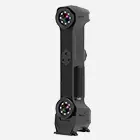
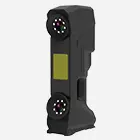
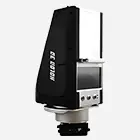
The HOLON Proscan 3D scanner utilizes full blue-light technology; by adjusting laser intensity, it penetrates black surfaces directly, enabling the complete capture of details—such as snap-fit barbs and hole features—without the need for spray coating. It combines ultra-high precision (0.02 mm) with high-speed scanning (4.2 million points per second) to accurately reproduce micro-structures. Specialized modes—including a deep-hole mode to overcome imaging challenges and a precision mode for intricate detail—ensure that reverse-engineering data for complex plastic parts is complete and ready for use, providing a solution that perfectly meets customer requirements.


Measurement data