




- A +
- A
- A -
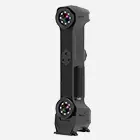
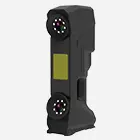
Automotive window glass is an important component of the vehicle body. The customer needed to obtain high‑precision complete data of it through 3D scanning and generate a CAD model available for production and processing via reverse modeling. Since this window is made of transparent material, powder‑spraying pre‑treatment was required before scanning. The customer had strict requirements for data accuracy and detail reproduction, which could not be met by traditional measurement methods. For this reason, the customer selected the HOLON 3D Model 49 handheld full‑blue‑laser industrial‑grade 3D scanner to deliver a digital solution.

Real‑life photo of the car window

Physical photo of car window after powder coating treatment
The core difficulties in reverse‑modeling scanning for automobile window glass lie in material properties: transparent glass allows strong penetration of measurement signals, so conventional scanning equipment cannot directly capture its surface contours and dimensional data, and powder‑spraying pre‑treatment is mandatory. Car windows feature large‑sized special‑shaped curved surfaces; traditional local measuring tools struggle to fully cover all global features, which easily leads to missing data. Reverse modeling imposes extremely high requirements on data accuracy. Manual data stitching with conventional measurement methods tends to generate cumulative errors and fails to meet the standards for production‑grade modeling.

Scan the data graph

Scan the data graph
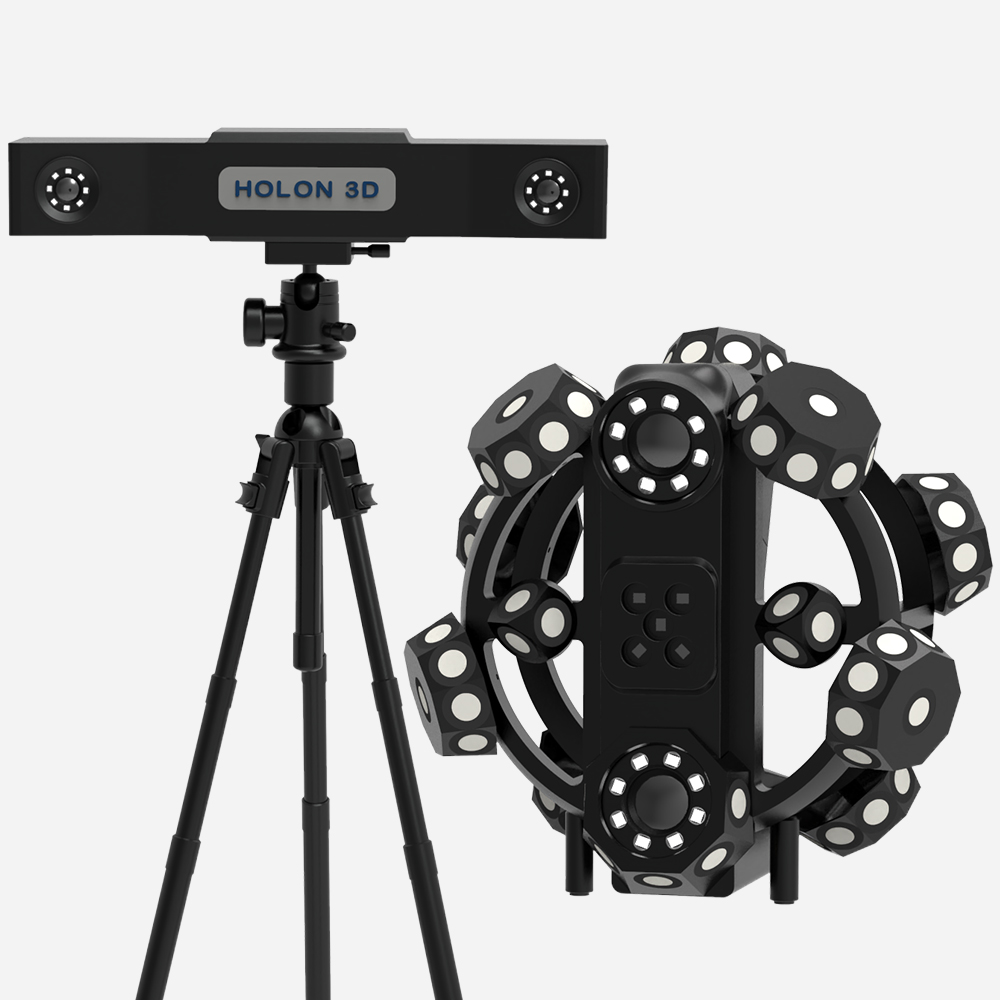
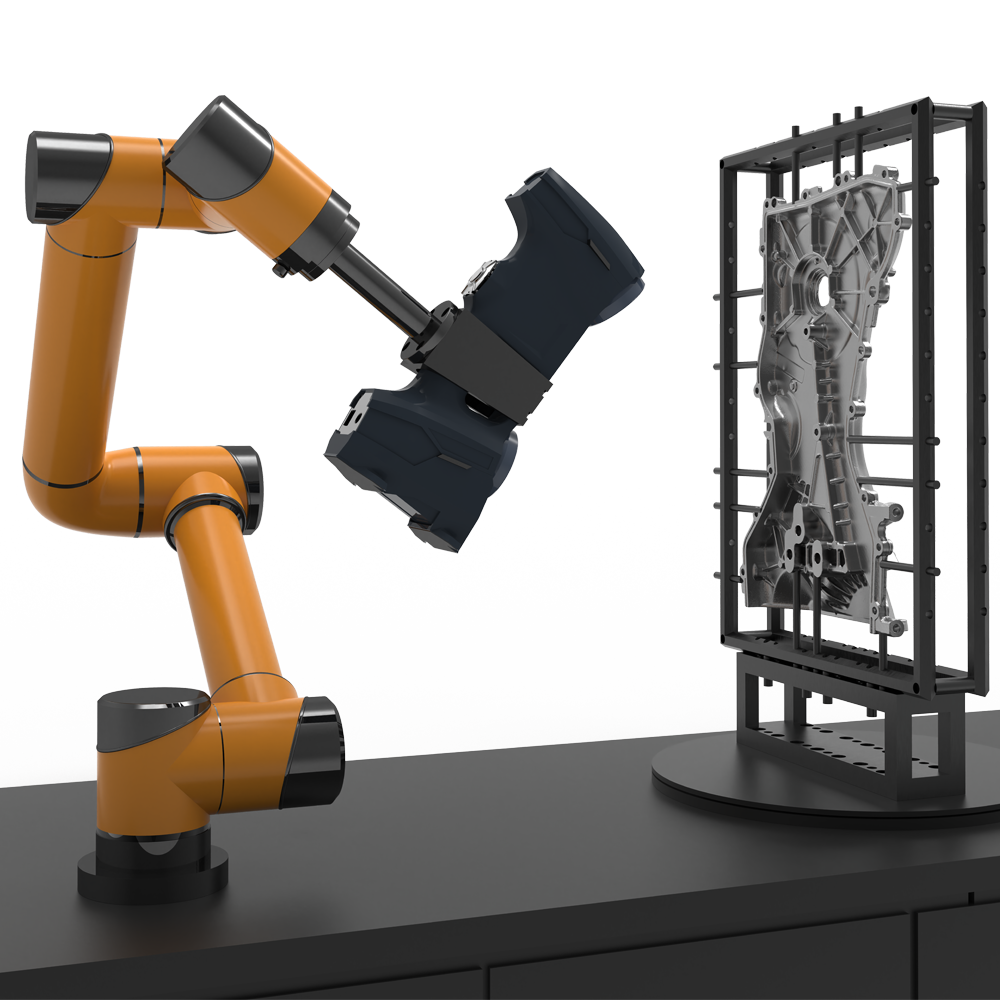
The HOLON3D Model 49 handheld industrial‑grade 3D scanner with full‑blue laser can be adopted to solve key targeted challenges. Featuring industrial metrology‑level accuracy and full‑blue laser technology, this device can accurately identify surface features of powder‑sprayed vehicle windows and efficiently capture curved contours and critical dimensions. Equipped with four scanning modes, it enables flexible switching according to different characteristics such as the large curved surfaces and edge contours of vehicle windows. Together with its handheld design that allows free adjustment of scanning angles, it delivers full‑area dead‑zone‑free scanning. High‑speed non‑contact measurement greatly reduces scanning time and prevents damage to the powder‑sprayed surface. Moreover, it is not restricted by working scenarios; stable, high‑quality data output can be achieved simply by pasting a small number of marking points. The scanned data can be directly imported into reverse‑modeling software to generate production‑ready CAD models, which fully meets customer requirements and provides reliable support for the replica production and process optimization of automotive windows.

Reverse‑modeling data diagram

Reverse‑modeling data diagram

3D‑detection chromatogram