




- A +
- A
- A -
The automobile instrument panel is an important component of automotive interior parts. Using the Hualang 3D scanner HL‑3DS combined with reverse engineering technology, data acquisition and 3D surface reconstruction are carried out on the existing automobile instrument panel, and secondary design is performed based on the obtained three‑dimensional data of the automobile instrument panel.
1. The simple use of traditional inspection methods (such as gauges, jigs, coordinate‑measuring machines, etc.) is extremely cumbersome and time‑consuming. This results in incomplete acquired data for automobile instrument panels, making it impossible to conduct quality inspection and secondary design of automobile instrument panels.
2. It is necessary to quickly obtain a three‑dimensional digital model of the automobile instrument panel. However, the automobile instrument panel features complex curved surfaces and numerous hole positions for fitting with automotive meters, which imposes high precision requirements.

Physical photos of the car instrument cluster
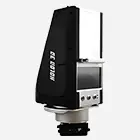
Traditional automotive dashboard design was carried out concurrently with instrument panel design. After the completion of the 3D model for whole‑vehicle assembly and the fabrication of different moulds, mould trial runs and assembly were performed. This process required coordination between the dashboard and instruments, which meant there were two sources of uncertainty, extending the revision cycle and raising manufacturing costs. To address the problems faced by clients, engineers at Hualang 3D proposed a solution that employs the HL‑3DS 3D scanner (for rapidly capturing high‑precision 3D data of automotive dashboards), reverse‑engineering software (to convert the point cloud data of automotive dashboards into triangular mesh surface data), and post‑processing within design software to accelerate the secondary design of automotive dashboards.
1. Pre‑preparation
Spraying developing agent: to improve the contrast of the base colour on the sample surface and obtain higher‑quality scanning data.
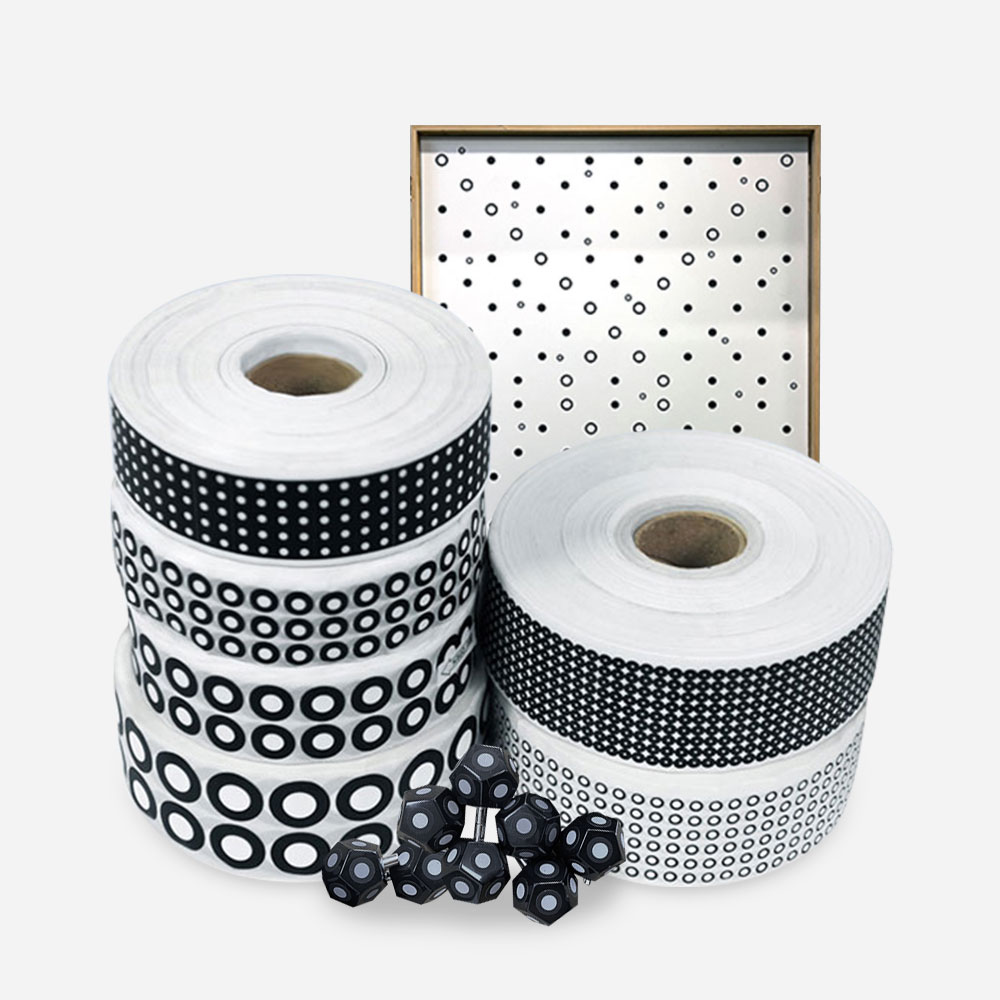
Attaching marker points: to enable positioning and splicing of the acquired data in the scanning software.
2. 3D Scanning
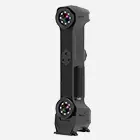
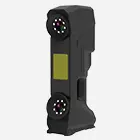
Hualang 3D engineers used the HL‑3DS 3D scanner to rapidly acquire high‑precision 3D data of the automotive dashboard. The HL‑3DS 3D scanner adopts technologies including extrapolation‑based multi‑frequency phase‑shift grating and automatic full‑range splicing. It delivers fast scanning; acquiring 3D data for an automotive dashboard only takes 30 minutes, with data precision up to 0.03 mm. The acquired 3D data of the automotive dashboard is imported into reverse‑engineering software for post‑processing. This speeds up the secondary design of the automotive dashboard, provides reliable parameters for other relevant departments, and accelerates automotive dashboard production.

STL data diagram of automobile dashboard

Cloud data for automobile instrument panel