





- A +
- A
- A -
Vehicle doors are critical components of the car body, requiring a balance of safety (built‑in anti‑collision beams), sealing performance and lightweight design. 3D scanning technology uses laser non‑contact acquisition of millions of 3D coordinate points on the door surface to rapidly generate high‑precision digital models (with precision up to 0.02 mm). The acquired data can be applied to reverse engineering (reproduction of classic car models), manufacturing quality inspection (identifying assembly gap deviations by comparison with CAD data), aerodynamic optimization (curved‑surface deformation analysis), and personalized modification (scanning‑based adaptation for custom‑designed door shapes).
It is necessary to scan the car door components. The car door features a complex curved‑surface structure with contours of varying sizes and numerous small peripheral holes. Conventional traditional 3D scanners require spraying a developer, which is time‑consuming. The scanned data is incomplete and fails to meet requirements, while the data obtained also suffers from low accuracy.

On‑site scan image
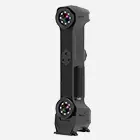
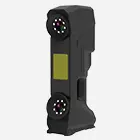
Based on the existing problems found in door scanning, the scanned surface contours vary in size and the hole positions are small. The 3D engineers at Holon proposed that a handheld 3D scanner can quickly complete the 3D inspection of workpieces, featuring faster scanning speed, higher precision and better stability. It adopts 49 laser beams and achieves a scanning speed of millions of measurements per second. Users may scan freely by hand without fixed installation. It is portable and easy‑to‑operate with a wide range of applications. Scanning can be performed in narrow spaces, and there are no special requirements for the working environment. It delivers truly high accuracy, with a maximum precision of 0.02 mm.
现场扫描图


STL data graph