





- A +
- A
- A -
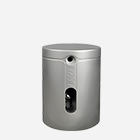
A structural design company brought a physical lens module prototype to HOLON 3D, requiring the acquisition of complete 3D data of the workpiece's external shape to complete reverse modeling and output an editable STP (Search Engine Processing) model for subsequent overall structural optimization, assembly simulation, and product iteration development. The workpiece includes complex curved surfaces, intricate fasteners, and irregularly shaped housings, and is intended for the medical equipment industry. High precision in data detail and external contour accuracy is crucial; data on internal optical components is not required, with the primary focus being on accurately reproducing the external structure.
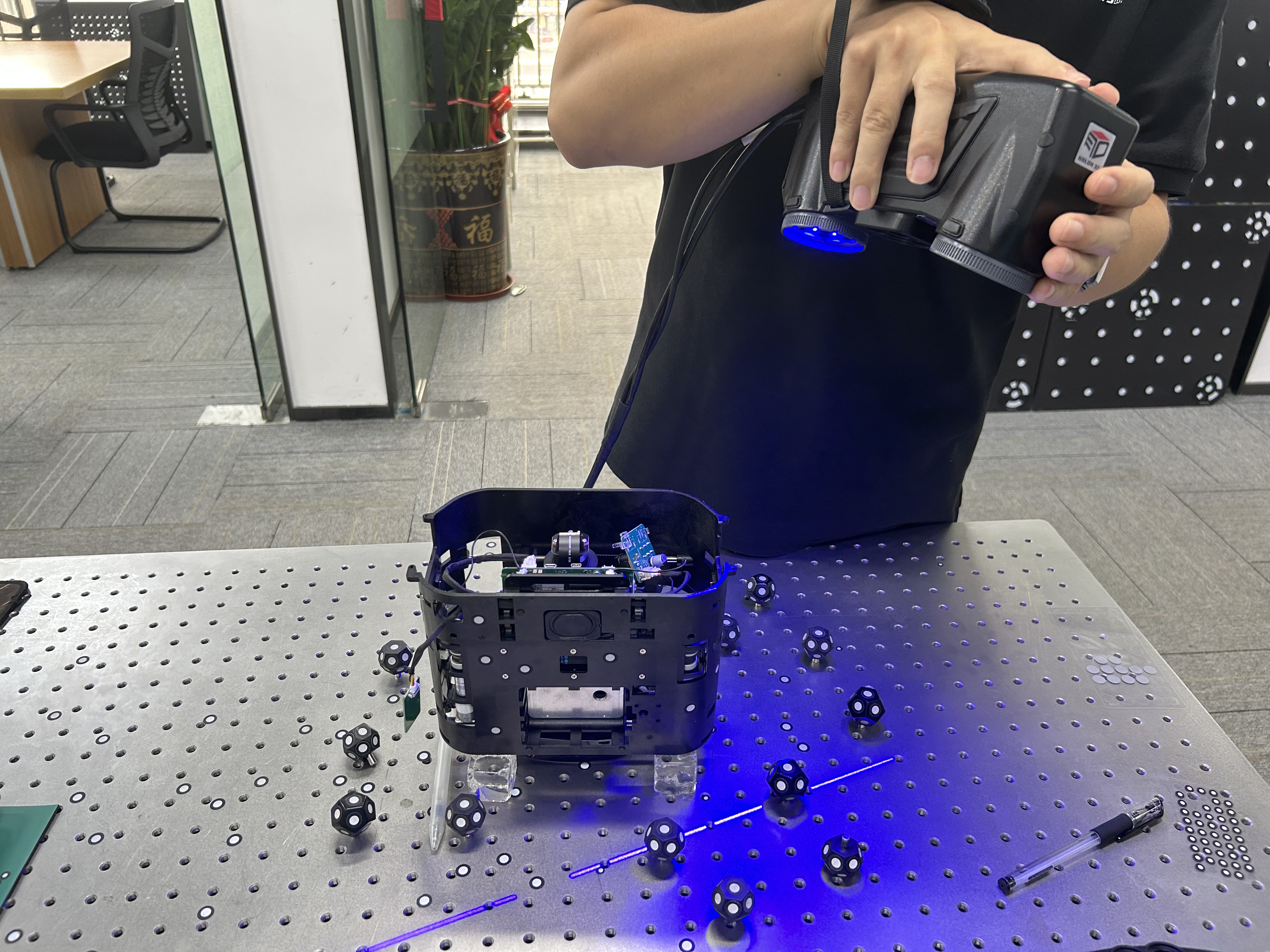
Manual surveying and surface modeling are time-consuming, and repeated model revisions and adjustments slow down the R&D progress, making it impossible to quickly provide the structural design team with a usable 3D model, thus hindering product iteration efficiency. Furthermore, the outer shell of some parts is made of a dark, light-absorbing material, which easily leads to data loss with ordinary scanning equipment. It requires the application of developing agent, which can contaminate the sample and is unsuitable for medical samples.
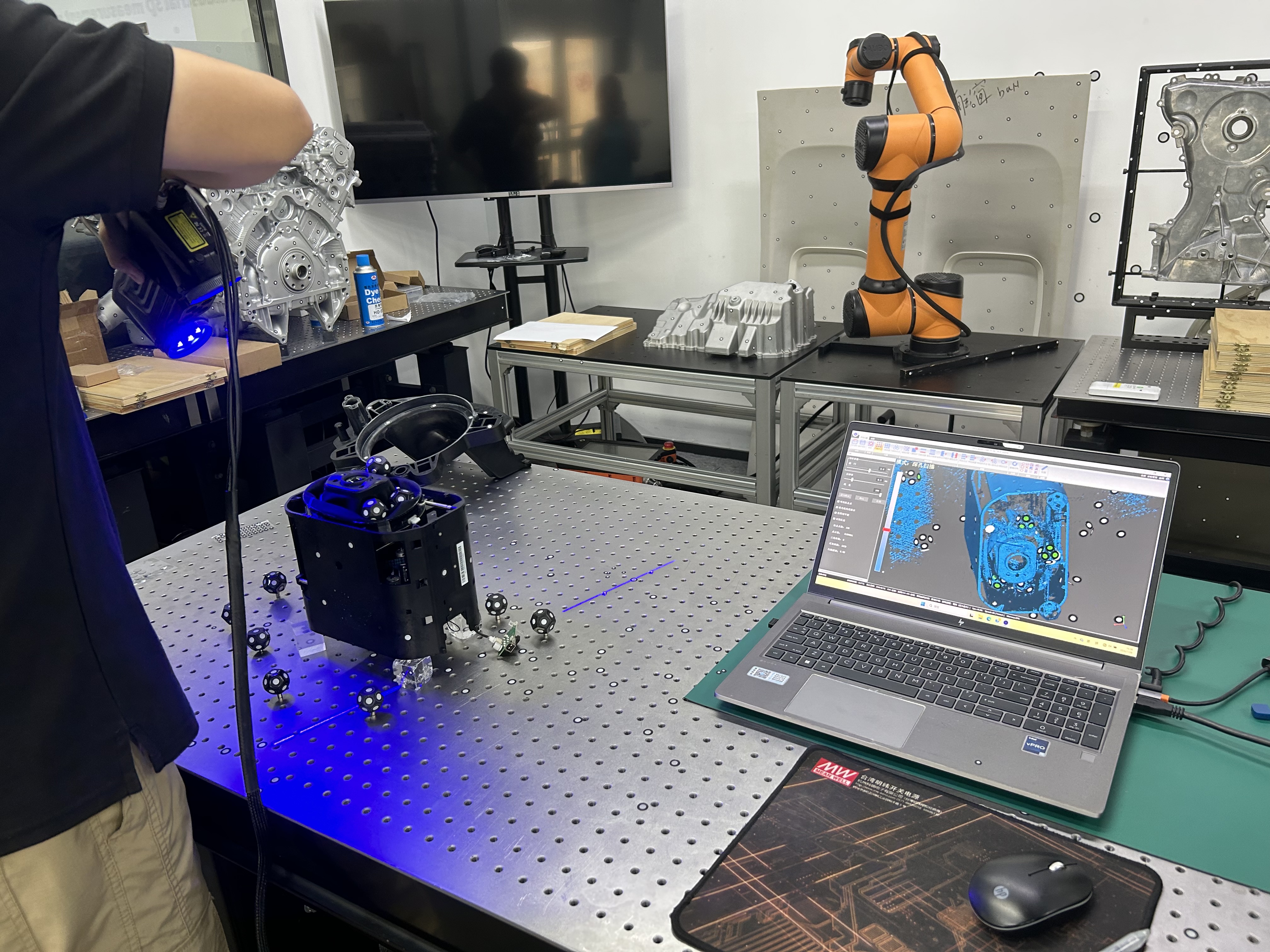
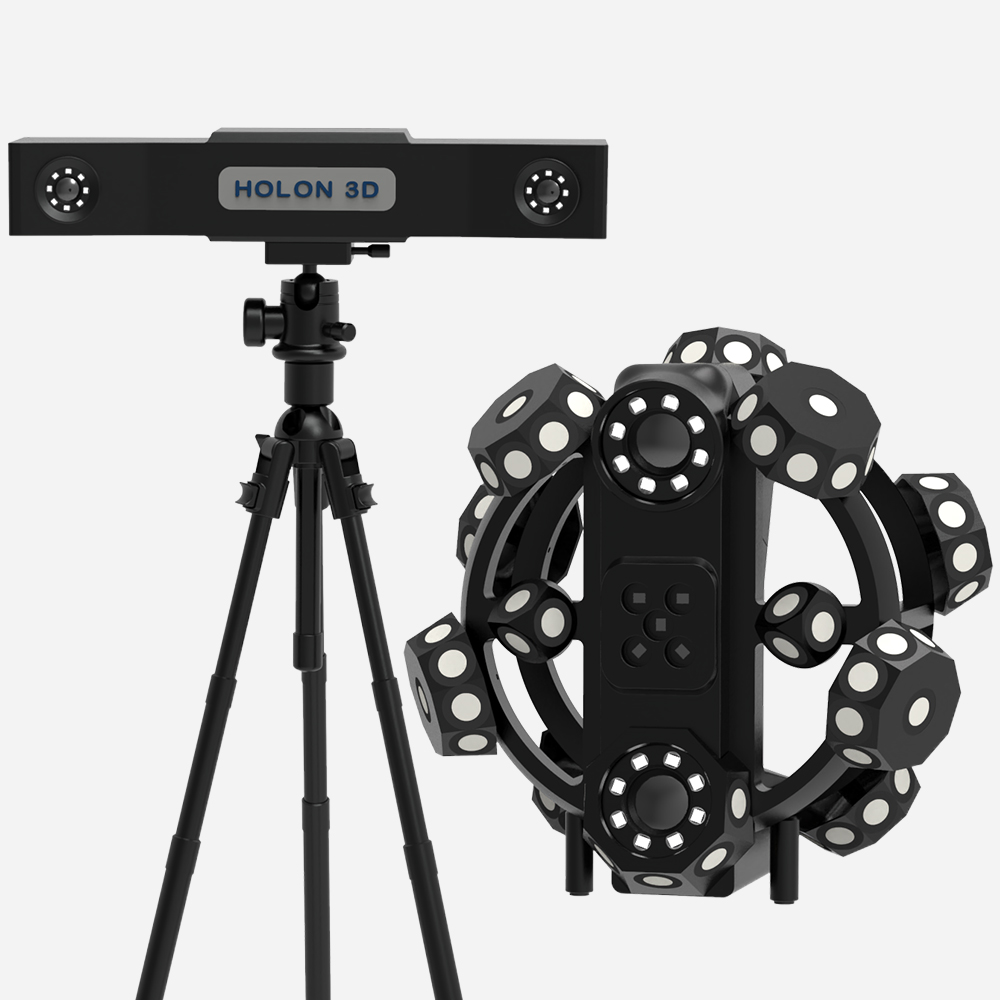
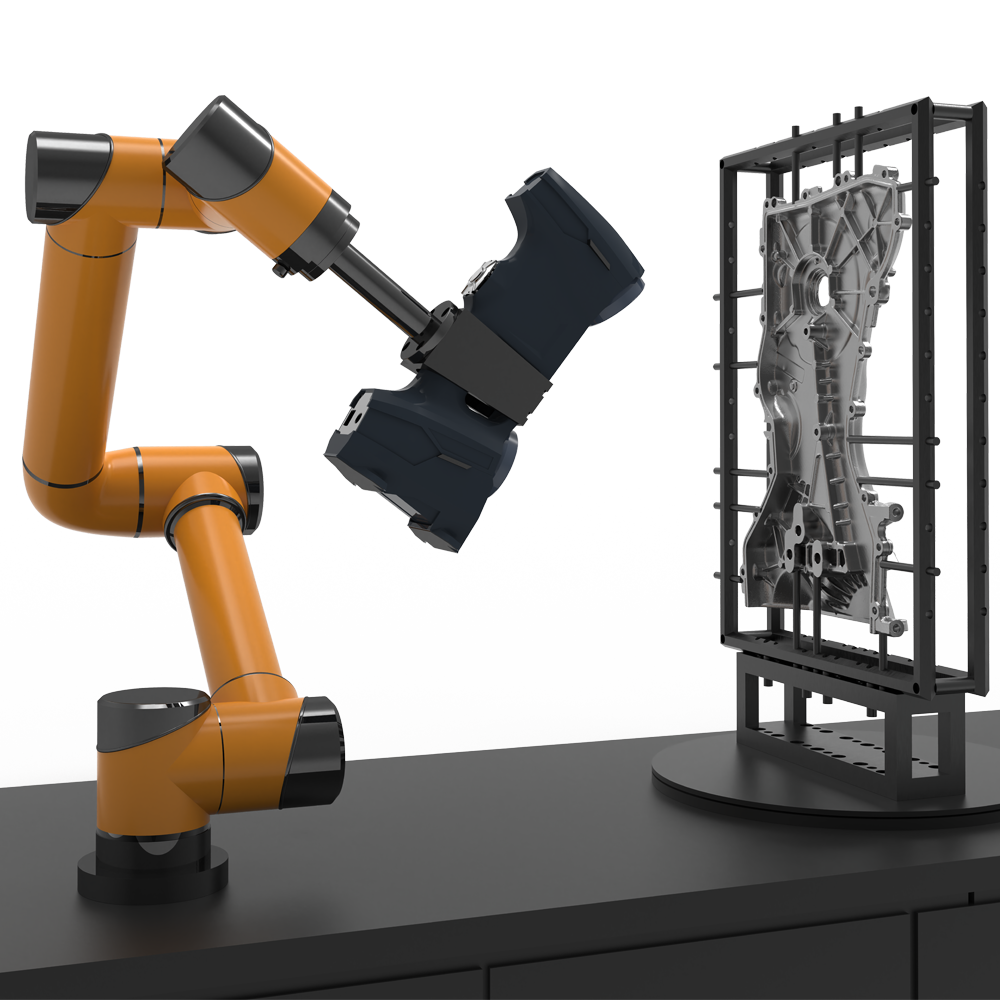
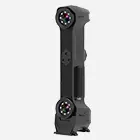
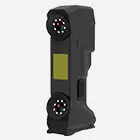
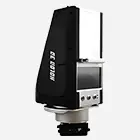
HOLON 3D industrial-grade 3D scanner is used to carry out non-contact scanning operations on lens module samples. The equipment's all-blue laser light source can directly deal with dark-colored, light-absorbing casings. There is no need to powder spray the workpiece to protect the original state of the medical sample. Quickly collect complete point cloud data of all external contours, surface curvatures, buckles, and limiting structures of the lens module, without involving internal optical components.
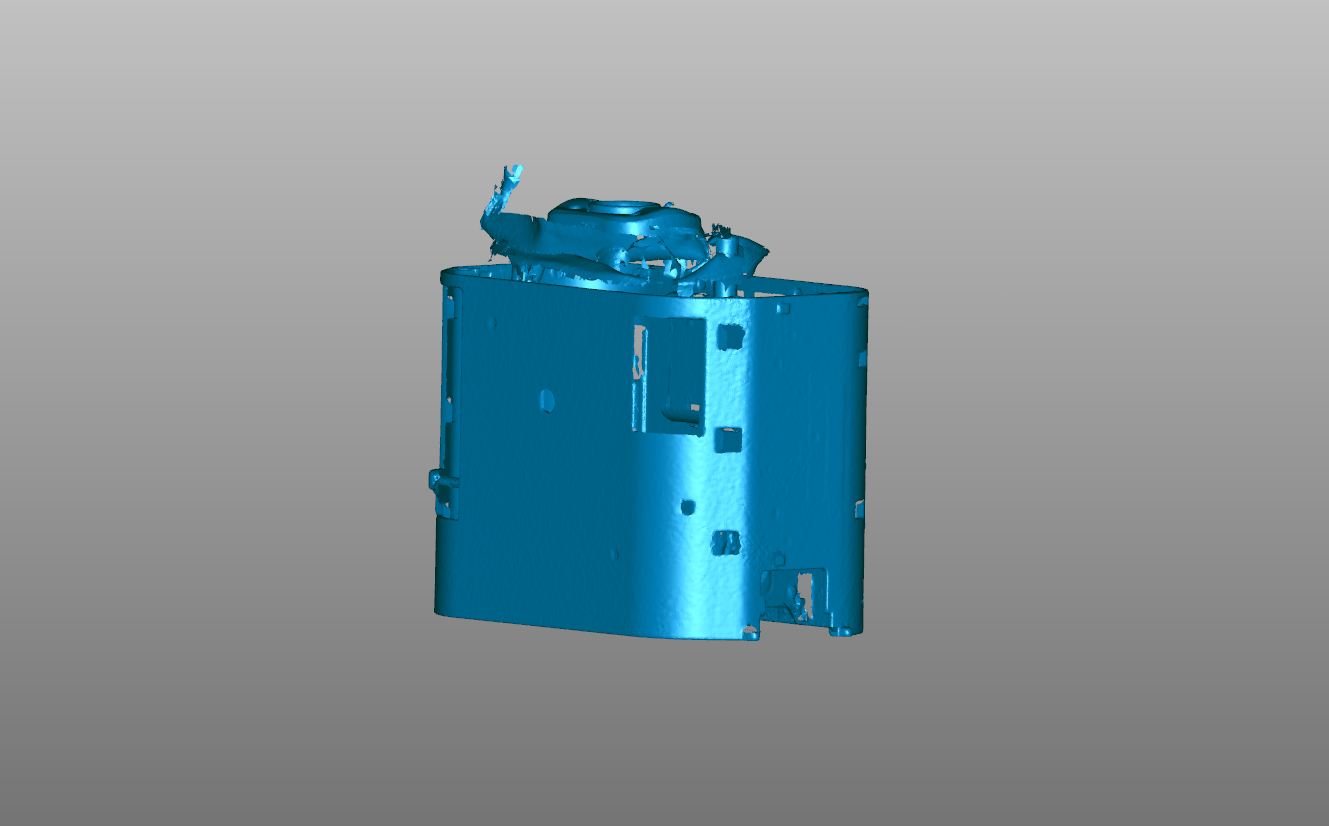
STL diagram of scanned data
The process involves point cloud cleanup and surface reconstruction, outputting an editable STP CAD model that closely matches the physical object's shape. Only the external structural data required by the client is retained, allowing for direct delivery to structural designers for assembly simulation, structural optimization, and redesign. The entire process is completed quickly, saving significant time spent on manual surveying and avoiding dimensional deviations caused by manual measurement. This helps R&D teams shorten the product iteration cycle of medical devices and achieves efficient conversion from physical prototypes to digital models.
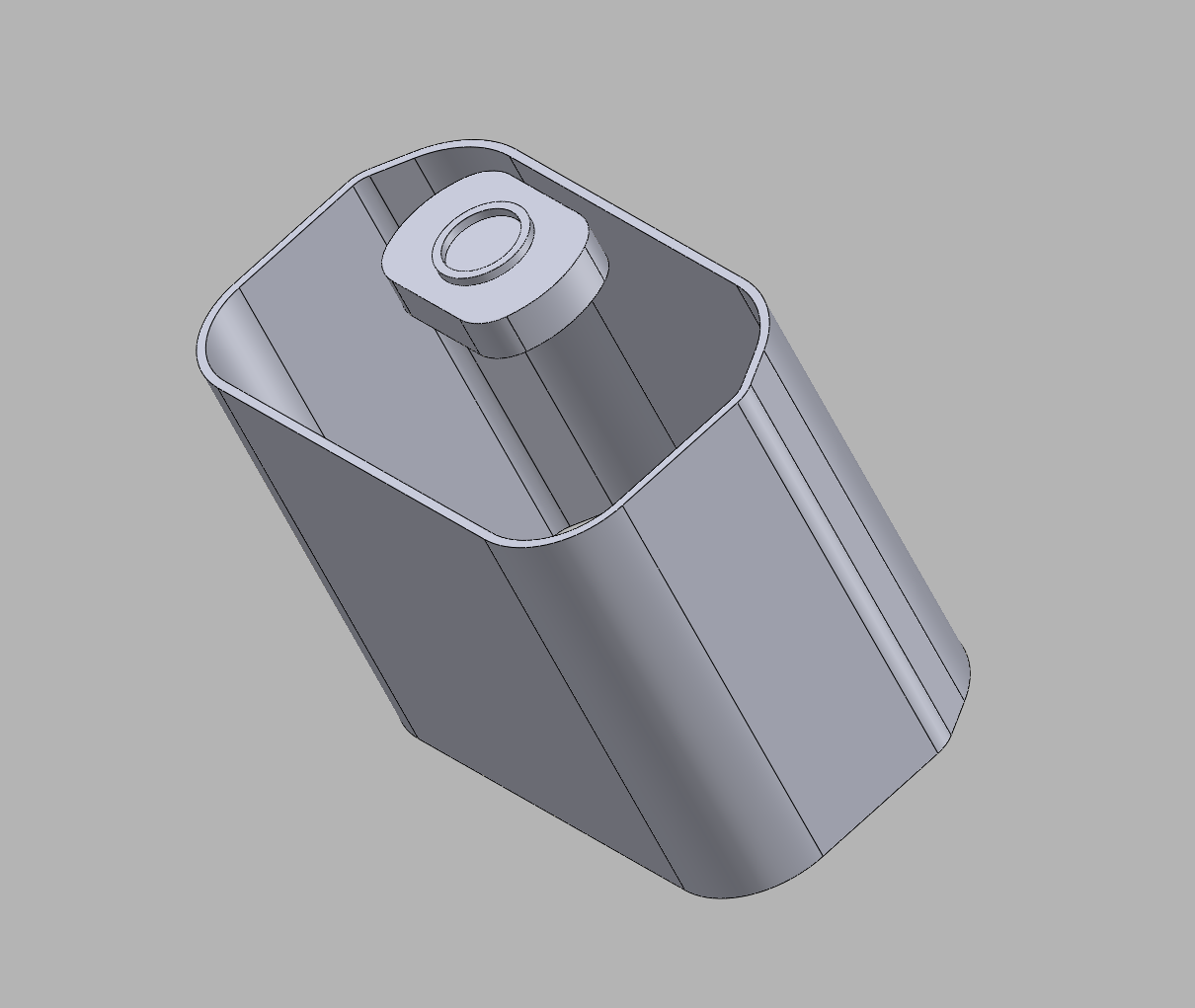
Reverse modeling STP diagram