





- A +
- A
- A -
LED lighting fixtures feature low‑voltage power supply, low energy consumption, strong applicability, high stability, short response time, no environmental pollution, multi‑color light emission and other advantages, and are being used more and more widely. Accordingly, higher processing efficiency is also required for manufacturers of LED lights.

On‑site photo of LED beads
1. This LED wick features numerous curved surfaces and a relatively complex shape, which makes mold design increasingly difficult and extends the design cycle.
2. When a traditional coordinate‑measuring machine is used to measure complex surfaces:
① The limited number of measurement points acquired prevents accurate representation of the 3D data of the curved surfaces.
② Meanwhile, as a measuring instrument equipped with a hard probe, it is not suitable for 3D data measurement of soft materials such as plastics.
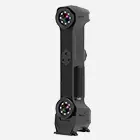
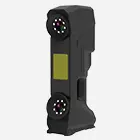
This LED wick features numerous curved surfaces and a relatively complex shape, which makes mould design increasingly difficult and extends the design cycle. To address the problems faced by the client, engineers at Hualang 3D adopted the HL‑3DM 3D scanner (to rapidly acquire high‑precision 3D data of the LED wick), reverse‑design software (to convert the point‑cloud data of the LED wick into triangular mesh surface data), and post‑processing in design software to accelerate the secondary design of the LED wick.
1. First, scan the LED wick with the HL‑3DM 3D scanner to obtain high‑accuracy and high‑precision point‑cloud data;
2. Process the data with reverse‑design software to generate a 3D model in STL format;
3. Import the 3D data of the LED wick into reverse‑modelling software for reverse modelling;
4. The CAD data generated by the reverse‑modelling software can be applied to CNC machining, rapid prototyping, appearance quality inspection and other scenarios.
The acquired 3D data of the LED wick supports a wide range of subsequent applications:
1. Product improvement;
2. Product quality comparison.

STL data diagram of LED beads

STL data diagram of LED beads