






- A +
- A
- A -
Statues—particularly figurative sculptures—are works of public art that best reflect the cultural atmosphere of a society. By using a handheld 3D scanner to capture 3D data of the plaster cast of *David*, students can create their own original works while building upon the foundation laid by the master sculptor.
1. There is a need to rapidly acquire a 3D digital model of the plaster cast of David; however, the statue features numerous curved surfaces and complex, varied groove shapes.
2. Traditional measurement methods yield limited data and fail to accurately represent the 3D surface geometry of the plaster cast.
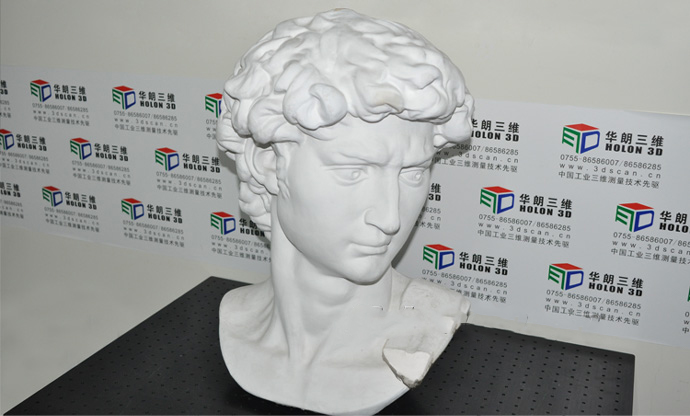
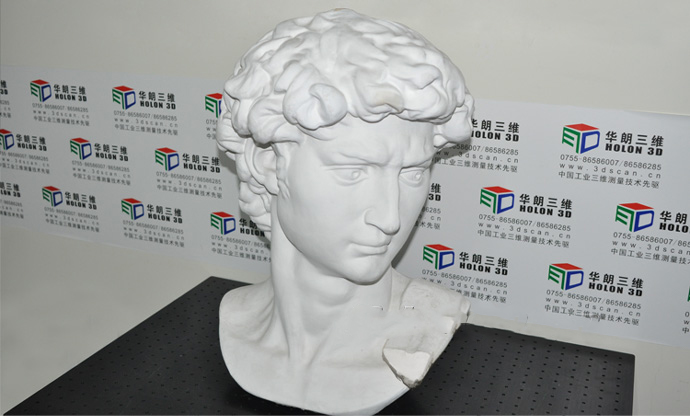 The Statue of David
1. Project Requirements
Use a handheld 3D scanner to capture 3D data of the David plaster bust, enabling students to build upon this existing data to create their own unique artworks.
2. 3D Scanning
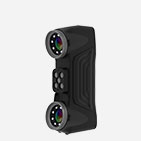
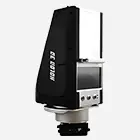
To address the complex surface geometry of the David bust, HOLON 3D technical engineers utilized the HL-3DH-F handheld 3D scanner. Based on curvature-based alignment, the HL-3DH-F is ideal for scanning objects with complex surfaces; it eliminates the need for reference markers, as the device automatically captures surface data and performs alignment. Weighing only 0.70 kg, this scanner is highly user-friendly; it captures the David bust in just 5–6 minutes while faithfully reproducing intricate details, such as the hair. HOLON 3D’s scanners offer students a new approach to design and creation, bridging the gap between the physical and virtual worlds. This allows students to bypass tedious manual work and focus entirely on showcasing their creativity.
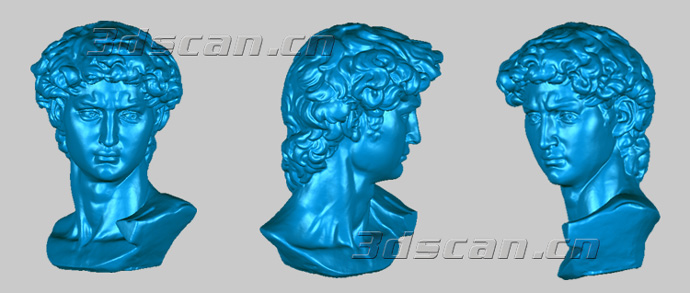 Point cloud data of the David plaster cast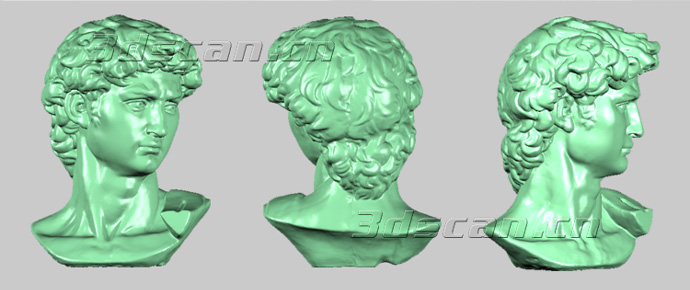
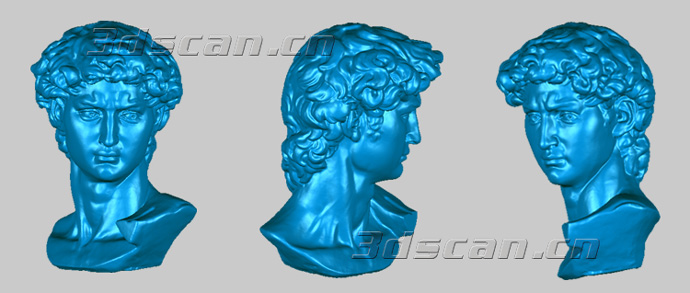
Point cloud data of the David plaster cast