




- A +
- A
- A -
The hexagonal valve core is a critical rotating component in fluid control valves; the symmetry of its hexagonal body, the profile of its sealing surfaces, the angles of its chamfers, and the fit dimensions of its journals directly determine the valve's sealing performance and flow control precision. Lacking original design drawings or CAD models, the client required 3D scanning technology to acquire high-precision geometric data and reconstruct a 3D solid model suitable for manufacturing, inspection, or optimization. This approach replaces traditional manual measurement and trial-and-error machining, thereby accelerating the processes of spare part replication and product redesign.
The absence of original design drawings prevents the direct modification of molds or the replication of the valve core. Relying on manual measurement and iterative trial machining results in low efficiency and poor precision, making it difficult to meet modern manufacturing requirements for rapid response and accurate reproduction.

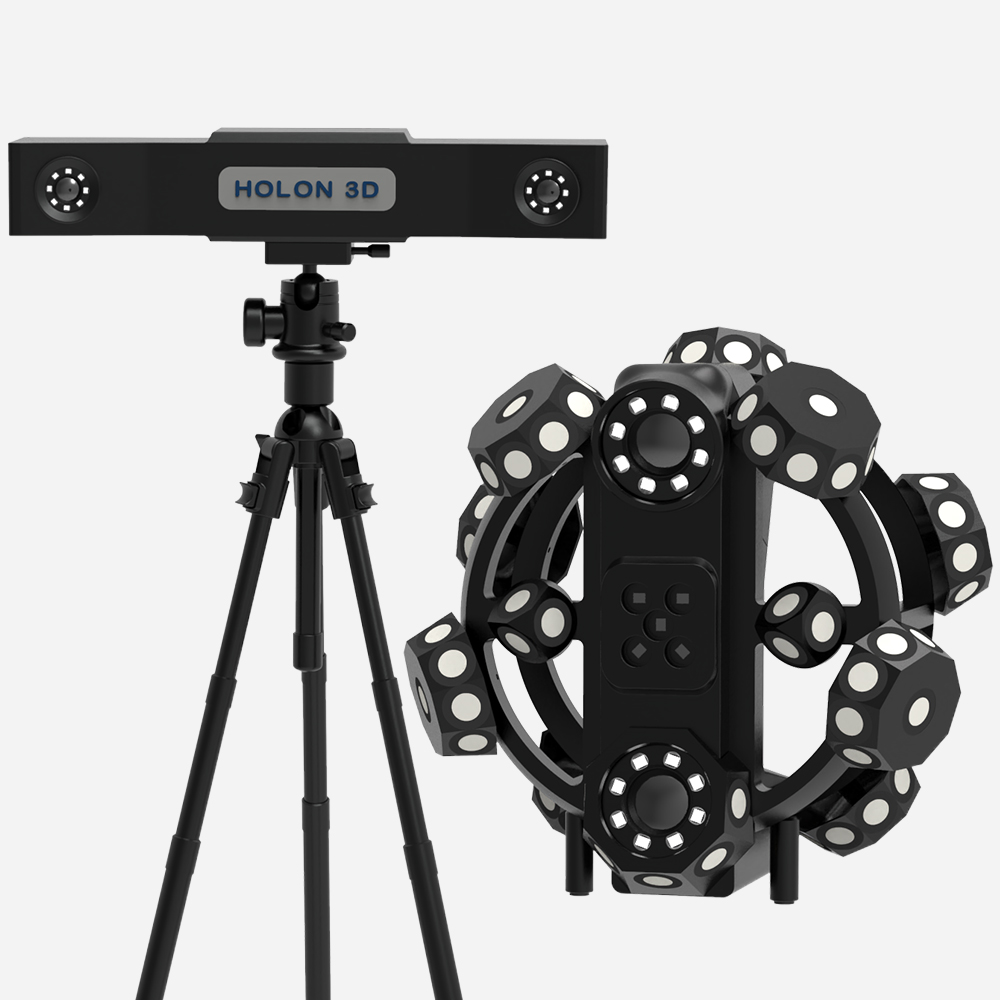
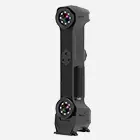
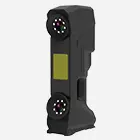
To address the aforementioned issues, the HOLON3D handheld industrial-grade 3D scanner—utilizing full-field blue laser technology—was employed for scanning. Its flexible handheld design allowed for easy angle adjustments, enabling the comprehensive capture of intricate features such as hexagonal edges, chamfers, sealing conical surfaces, internal bores, and journal sections, thereby yielding high-density, high-precision 3D point cloud data. The acquired point cloud data underwent noise reduction, smoothing, and simplification to eliminate background artifacts, resulting in a complete, smooth point cloud model (in STL format) that accurately replicated the valve core's actual geometry. Finally, the point cloud model was imported into professional reverse engineering software to generate a parametric solid model.
 Hexagonal valve core point cloud model
 Reverse-engineered model of a hexagonal valve core